“Nobody is perfect.” “Good thing I’m a nobody.” – Talking about perfectionism

Coming from the saying in the title, I feel like that sums up the point of this article very well. “But does it really?”, comes to my mind out of nowhere. Being a considerate and open person, I take it from there: “ok, so how could it be better?”. As the doubt, that sparked up at the beginning, gets bit by bit more of my attention, so do more thoughts and possible options start arising – one by one, more and more, until it inevitably becomes and avalanche, that buries my original creativity and leaves me crippled, anxious, frustrated or annoyed, to only name the most common results. Does that sound familiar to you? If so, chances are you’ve likely strived to “be perfect” at some point or even on a regular basis.
I’m describing the crippling effects of perfectionism. As humans experiencing life, with our multitude of layers and complex aspects, we’ve somehow started to incline towards “being perfect”, in one way or another. In this article I want to talk about perfection(ism) and some of my experiences and insights about it. How it can go from simple desire to “do better”, to subtle overcompensation, to a gnawing irritability, to (potentially, if unattended) full blown extremism or more accurate: dangerous (fatal) illusion. Um, let’s read on to hopefully avoid that last one… 🫢


Now, “be perfect” isn’t quite what people usually mean when we say “be the best that you can be” or “be the best version of yourself“, just to be completely clear. Everyone of us innately is already perfect (speaking from a more “cosmic” perspective), but also our individual perception of “what is perfect” vastly differs from one another. So let’s start out by taking a look at what we’ve “objectively” begun to comprehend as perfect: for example, the first response that comes to my mind would be: “someone is perfect, when they have a well paying job and successful career, a big house and nice car(s)/things, a perfect family…”. Would that resonate with your very initial thought of perfect too? If we take a closer look at that (very text-book) example I gave – everything mentioned stems from outside the person who is supposedly perfect. That is a strong indicator of how very materialistically we’ve been conditioned to view our reality. It is just this line of thought like “when I have [this and this], my life will be perfect” that is causing most of todays mental- and general health ailments, like stress, burning out, depression and chronic fatigue (not to mention the very cause of OCD and similar mental disorders). That is because we are still inclined to relentlessly achieving our goals, mostly “just to have/possess something or be in a position of (seeming) power and/or control”, forgetting or even dismissing our health and emotional/psychological or even societal wellbeing. It is a very “ego-based” thought pattern, friends. One, as we know, that doesn’t have an end to it. At least, not a very uplifting one, if left unattended.
Luckily, as human consciousness is starting to expand (rapidly, I might add) and as we are coming in contact with our more spiritual, creative, gentle and conscious/aware nature, there’s an increasingly more emphasis on the more “core” values, like character, interaction, good intention, being open, etc. that are slowly but surely filling in the gaps of a much more complete version of “perfect”. That being said, let’s try to break down perfectionism a little further nonetheless and explain how “the good kind of perfectionism” differs from “the rather bad (arguably dangerous) kind of perfectionism”.

Different kinds of perfectionism

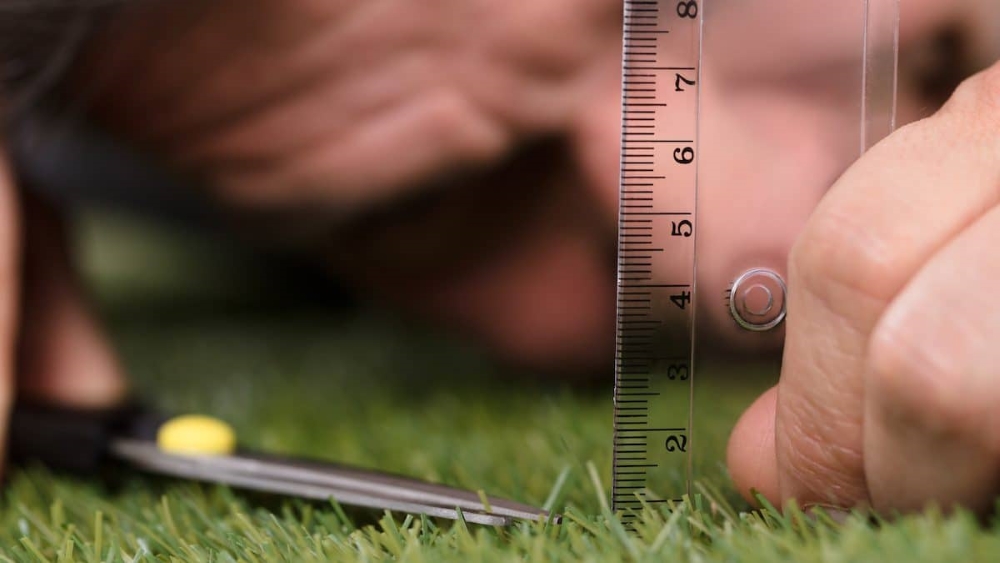
By “the good kind of perfectionism” I mean, that the better version of perfectionism is the one that encourages us to strive for “a little bit better”, “do just a little more next time” and the like; pushing or rather extending your comfort zone in an appropriate way, helping you reach your true potential. That is a very healthy approach to growth, both personal and general. In this form it is highly encouraged and a very useful skill/trait to have, when achieving your goals. In practice it would be easiest to explain with using someone as a role model – to have someone to (temporarily or situationally) measure up to. That someone should be a healthy perfectionist too, of course, ideally. Lots of successful sportsmen and women, for example, have had this form of healthy perfectionism in their toolkit when they were reaching for the top position and still keep practicing it to-date. A lot of them even attribute the most relevancy to that trait as it ties in closely to necessary consistency, aswell. This is also one way of how comparison isn’t necessarily a bad thing. It can have benefits when knowing your limits, of course. All in all, this form of perfectionism is very grounded and can be thoroughly beneficial in many aspects. A different story is the “trap of the mind”, the other kind of perfectionism.

The “not so great” type of perfectionism

I’ve heard an interesting saying about success and/or successful people, that I tend to frequent when starting to dwindle down to the bad/dangerous kind of perfectionism: “winners focus on the goal/getting better, while losers focus on winners“. (I’d put the spiritual/growth term as “getting better = elevating themselves while having fun”, personally). When we focus too much and measure up too much to someone or something, our reality starts to bend into illusion. It becomes realistically unfeasible and out of (realistic) bounds. Through our illusory/ego-based perception, our perceived “goal” becomes limited to solely “being as good as or better than that winner” or “just possessing that thing” or “achieving that state/feat”, without much of reasoning and conscious effort behind it. By that our actual goal becomes shrouded in a foggy image, being completely dismissed and of course it’s to no surprise that we are then unable to accomplish it and ultimately suffer (and complain) even more, when we “fail an un-winnable battle”. This kind of perfectionism is very ego/materialistically driven, as mentioned before. Luckily, again, with increasing awareness we are starting to see through this mind trap. One way of breaking this cycle is to ask yourself: “what do I really want to gain by being perfect in this case?” or better: “for what, within myself, am I trying to compensate with this excess perfectionism?”. The root cause of this is usually an unbalanced sense of safety, belonging, acceptance or pride of yourself. Only by acknowledging this emotional or psychological instability/unbalance can the root be properly tackled. Ask yourself: How can you better meet this need without trying to be perfect?

“Perfection is a myth”

At the end of the day; at the end of everything/time, every single one of us is perfect, just the way we are. That is individualistically speaking, of course. But just like “the law of accumulation” (as I’ve just now learned, that it is in fact a factual thing!), which says something along the lines of: “every great (financial) achievement is an accumulation of hundreds of small efforts and sacrifices that no one ever sees or appreciates“, this has greater meaning. Something that goes somewhat ignored nowadays (or silently follows the entire time) is, that:

“A good, well built, strong and prosperous community/society is built from/through many good, well built, strong and prosperous individuals.”

Žiga Grušovnik

= again, every single one of us. (There is a consideration of “individual vs. society”, even in an evolutionary concept, not to be dismissive, but for the time being, I’ll leave that to those, who work directly with/on that or for another discussion/article). It is only through our own (learned/acquired) perception that we start overcomepensating, competing and trying to reach “perfection” (=an illusion) by overthrow each other instead of growing together.

It always helps to have solid footing beneath our feet – our dance(ing) of life, experience and souls becomes much more magical that way.” 😉

Žiga Grušovnik

The saying “Be the change you want to see in the world” hasn’t come more handy – as we, together, still form society it is in a part reflecting our own perception back at us: when we see society or our surroundings as faulty, negative, destructive, “imperfect”, that just might be what we “perfectionalistically” see of ourselves. Instead be “the your perfect version of yourself” and your world-experience is sure to turn into your example. 🙂


What is your take on perfection(ism)? What is perfect for you? Did this article send some senses spiraling due to it not being perfect? 😛 Have you learned to tame it and are using it to your advantage? Or are you perhaps struggling with it? If you are, or know anyone who is, be sure to contact us to assess your situation better and prepare footing, from where you can change this habit into a useful trait.
Until next time stay safe, grounded and I’ll see/read you in another moment in time. 😀

“Energy(-ies) of character“ – how to identify your nature

You can’t make use of a map, if you don’t know where you are on it.

Žiga Grušovnik

How would you describe yourself? How do you usually feel and how would you say you generally experience the world and your life? If we simplify the matter: would you say you’re rather gentle or dominant? Or would you perhaps say “mixed”? Any answer is correct and they are definitely interchangeable, as is life overall too; and none is “better than the other”, don’t worry. Being human can be immensely complex, if we make it so, but if we start out simple, we can see, that people pretty much always show their true nature – in their appearance, the way they act, how they interact, react, etc. After we break it down to the core, it usually comes to two sides (“natures”): either you’re gentle or dominant. Allow me to explain further:

In my life changing learning/teaching course – after I had fallen ill to depression and anxiety and sought professional help (to no avail) then “by chance” found someone who could and DID help, along with the opportunity of a lifetime – my mentor established and explained the perspective of character energies. Initially he remarked these energies in a comical/ironic way, saying “you’re either the driver/coachman or the passenger”. And when elaborating the “mixed” energy, I added “…or you’re on your own, on foot“, to which he laughingly nodded. These natures come with their own perks and drawbacks in all cases. Let us take a closer look at these notions and explain how knowing your characteristic can potentially help you understand yourself better and even help you progress forward in life.

Different types of character: Gentle energy

We used to classify these energies to male and female energies too, but they are generally very similar, so we’ll just mention them in general. Let’s start with the gentle energy: as I originate from this one too, speaking from experience, people with gentle nature tend to be easily overwhelmed. By pretty much everything. That’s how I would put it in one sentence. You can also imagine the sensation as “delicate” (that’s actually a better expression; since I am translating this from my native language). These are people stemming usually from families/parents, who “did everything for (instead of) their kids”, inadvertently preventing them from acquiring authentic real-life experiences. Overall, these people are prone to rather psychological, mental and spiritual sensations in comparison to dominant energies who are typically more prone to physical stress. Delicate energies are also very “leadable”, meaning that they are insecure about themselves and therefore believe and follow others (usually dominant energies) quicker. Delicate folks also struggle a lot with self-expression. Silent/held-back/distant and “background” are common terms within all “delicacy”. But through just that they tend to make excellent observers, creators, teachers (-when they learn (how) to express themselves), analysts,, therapists… basically, people with gentler energies hold their unique “warmth” and “purity” within them (something the world largely needs and always benefits from). It’s these energies who sense impending changes and fluctuations the most and the soonest, but, again, are also usually “overshadowed” by them aswell.
The best thing people with this energy can do for themselves is to re-affirm themselves as individuals, putting themselves first (non-egotistically), being gentle, caring and accepting of themselves, just as they are (But without being “babied” too much! That’s a case of “dangers of comfort zone”, which is a whooole other topic…). Then ultimately express themselves/share their warmth with others and “reconnect” (the world, for example 😛 ). That’s a short summary of what makes up “the passenger“-energy. Next, on to “the coachman/driver“.

Dominant energy

Dominant energies: these are like a polar opposite to delicate ones – they are highly assertive, in the forefront, usually louder, upfront and direct, “tough”… but through all that also prone to arrogance, relentlessness; demanding, apathetic, egocentric or ignorant, to not take it further. They also put extreme focus on materialistic aspects as well as looking to “prove themselves” wherever, whenever possible. BUT, dominance is not as bad as I made it sound, don’t be mistaken. Despite being inclined to a lot of negative aspects, these are some of the most hard working and successful people in the world. If you want to learn work ethic, dedication/devotion, the good kind of perfectionism (and sometimes the bad one too), you’re likely going to turn to a person with rather dominant nature. It’s also strong people like these, who make the most impactful “hard-hitting decisions”, both in the personal sphere as well as in business and ultimately “the world at large”. That’s why these kinds of people make (arguably) great politicians and leaders, chiefs and directors; basically leading positions simply require a strong head who takes charge. From there the naming of “coachman/driver” – at some point we all need someone strong to take the wheel and lead us, when we’re too afraid or held back (as delicate energies, for example).
Through their tendency to “overwork themselves“, dominant energies are highly prone to burning out. Physical and mental over-exhaustion is a common side (or end-) effect that ails these energies and when ignored for a while, it frequently doesn’t just end up as a mild case. When our physical body is already being gnawed upon, that’s already an alarm going off, but when it’s even dismissed on top (ever so slightly), it usually bursts out in heavier cases. With dominant energies that can be in the forms of (chronic) back- and spine-pain, bodily tension (fibromyalgia), even to cancer of various degree, if not addressed for years, for example.
To prevent such extremes, god forbid, people with tendency to dominate have to balance out their devotion to work and material safety with a healthy dose of relaxation, mindfulness and not forget about their own needs and feelings. “Opening up“, to themselves and the world and loosening their rigidness or “traditionalism” – trying something new – are some practical examples of how to do that. Regardless of dominant or gentle nature, we are all “still just human” at the end of the day. 🙂

“Just the right balance” – mixed energy

Speaking of balancing – that’s pretty much exactly what a “mixed” energy or nature would be perceived as. A healthy balance of delicate and dominant. Being strong and devoted, when making decisions in life, taking on tasks and responsibilities and then being kind, gentle, in touch with oneself in times of merriment and calamity. It’s this balanced energy that incorporates true earnesty – being stable enough to develop from/upon and clear/level-headed enough to see the truth in things. Unlike dominant energy, which can be highly charismatic too, mixed nature possesses sincere charisma – stemming from inner warmth/compassion and earnesty/sincerity/purity (translation shortcomings!). Though not even these energies are completely free of restraints – it’s these people who tend to feel most insecurity and fears as they are quite literally “on the cusp of dominance and gentleness” at all times. It’s these individualistic, “free spirits”, who are prone to the biggest and harshest feeling of fear, which often tends to be even emphasised through illusion (-false beliefs from upbringing, for example) and/or are inclined to succumbing to their comfort zone, which leaves them feeling “stuck” and lethargic.
That’s pretty much it. “The person going on foot, next to the bus/carriage with the driver/coachman and passenger(s)” 😛 . Not much more to add to the mixed energy. This is the “status-quo”, dare I say, which we all ought to strive towards. It’s these kinds of energies, that make the most individualistic, ingenious, innovative impacts on the world and life in general. These are usually the passion-driven, silent heroes (“we don’t deserve”), who, just by doing their own thing, make an impact on their personal life and possibly on the lives of others too. Lots of newday influencers are wonderful examples of mixed energy in practice.

Benefits of knowing your own energy

In conclusion, knowing our true nature, in simple terms of gentle, dominant or mixed can very much represent the foundation of our life journey. The better we know ourselves, the better we know what we’re most suited for and how to take on things that we are still yet to be/become. From my observations, we’ve recently begun to strongly adapt the style of:

We know where we’re going, we know our goal and that is good. But if don’t know from where we are starting out, where we are right now, our goals are always going to remain distant. The journey only starts by acknowledging ourselves, our state and direction in the moment.

Žiga Grušovnik

Which is the root cause of most modern day disorientation, apathy, prevalent “fear of the future” and many other unpleasant feelings we come across.
It is ultimately the culmination of the smallest moments that lead us forward. We only need to acknowledge them, feel and experience them when they arise, then just release them, move on and before we know it, we arrive at our dream-life. (Who would’ve thought that life is a series of moments?) *wink* 😉

There is much more to this aspect of basic human natures, like how they interact with one another, for example, but this article was meant to simply outline the balance between opposing forces/natures.
So, would you say you’re rather of gentle nature? Perhaps you found some joy in that you feel more comfortable being dominant? Or are you even more startled yet excited to know more as a mixed natured individual? In any case, all comments, thoughts and responses are welcomed! In the end it only matters that you accept and appreciate yourself just the way you are. If you don’t quite feel that way, contact us and we’ll see if we can help you get to know yourself better.
See/read you in another moment in time! 😀

Answers are silent and come from within…

When you can’t go out, go within.” – is a statement/quote that strongly resonated with me as it is, but even stronger now, in these times of epidemic. (This is a translation; original text published in the Slovene language, on my facebook profile/page.)

If there was ever a time to calm down as much as possible and take some time to ourselves (be it only a moment 😉 ), to acknowledge and reflect on ourselves, our life and the state of our surroundings, it is right now.

“Whenever we can’t go further out(side), we can always step deeper into ourselves.” Just as we are aware of how big and endless the universe is, the very same is true for our inner experiencing. Take our personality, with all its aspects; our soul, which connects every living moment; ultimately even every cell in our body contains and accumulates tons of information, possibilities and (random?), activities, as recent research on quantum physics suggests, for example.

Therefore let’s us use this time, “when pretty much nothing is going on”, to break through the barriers that have and keep holding us back from our personal truth, our ability to love limitlessly and our true passion for life.

If we were living in fear, “that we shouldn’t be so distant to others or isolate ourselves from family/friends/society overly” (newsflash: that’s the exact reality we’re living right now!), then right now is the best possible time to let go of almost everything and everyone around us, that, arguably, somehow supplies or takes away energy in this “(socially) connected network” and look deeper into our own selves. It may sound “dark”, but yes, even our closest ought to be “released” from our (personal) energy and allowed to feel their own energy for themselves (and possibly look into themselves on top).

And NO, not “release/disconnect” as in “let them go/chase them away, not wanting anything to do with them”, but simply “let go” – meaning to allow the process of life do, what “has to be (done)”. You could also say “que sera sera” or “surrender to fate”, if that sounds more suitable to you. Anyway, simply put: to put all our focus/attention exclusively into/unto ourselves and our internal events.

Right here, inside, is a place of pure silence, peace and clarity. We just need to learn how to access it within ourselves. Even if we don’t know how (yet), the time is perfect to do just that too! At least try, if nothing else… Any time spent on learning (or attempting) something new, with every single “slip-up”, is always well spent as many (successful) people can vouch.

Even in these “isolating times” we keep having more options to choose from: either we become aware of the situation as it is, we don’t change all too much and keep on complaining (-“pitying ourselves“, “become a victim of being a victim”). OR, as mentioned before, we acknowledge our unhappiness and then DO something about it – as another wonderful, topical, saying goes: “overreacting is still better than non-reacting“. Or my interpretation: “any response is still better than feigning ignorance”.
Of course every start of something new is scary in some way, shape or form, but from just about every single “mistake”/fall that occurs, if we are inclined to being open and prone to learning overall enough, we can acquire something new and ultimately, step by step, fully accustom the desired knowledge.

In any case every one of us has someone “at their service”, who can help us to new discoveries and findings. This is happening more and more, as I’ve noticed – despite the increasing “confusion and misinformation” there’s more clarity, direction, advice being created/crafted. People seek and need “answers”, though these often linger within ourselves. That being said, it is never redundant to ask for advice or direction, or even simply to express/voice our sensations or experiencing (we all do it 😉 👍), but we have to be focused on reflecting our true selves first, as earnestly, directly, truthfully as possible.

And thanks to technology (and of course, all people/workers supplying us with basic necessities in these times 🙏), someone with clarity and guidance might be waiting behind the corner (or just a few clicks away) from the answer/solution… 😉 . As one of my friends put it perfectly:

Follow your heart, or, for starters, someone, who’s already doing it.” ❤

Ines Šinko (Hvaležnost duše)

What are you doing in times of (physical) distancing to stay grounded and keep the faith? How are the current worldly circumstances affecting you? If you felt inspired or reflected on any aspect, please reply to this post, I love reading uplifting stories 🙂 . Stay safe, stay healthy and keep the faith, friends! See/read you in another moment in time! ❤

“Quantum physics in one moment”

While (re)reading the book, “You are the Placebo” (Joe Dispenza), the chapter about “the quantum mind, to be precise (the shortest chapter in the book, ironically), I was actually quite endeared coming across the sentence: “the quantum model dictates, that all possibilities already exist in this moment…”. Of course, coming from “A Moment in time”, I was highly motivated to express some of my considerations and findings (opinions, really) on this topic in an (this) article. ^^ So, let’s chat a little bit about the leisurely topic of quantum physics and how it can help us create the best moments in life…

Our frequency/vibration; our energy is based on our current “state of being” (our thoughts + emotions). When we elevate our vibration/frequency, we become more aligned with the quantum model of reality/physics, as opposed to when our vibration lowers, we become more rigid/firm/“material”, which is the state/concept “classic physics”. Referred to as “Newtonian model” aswell, we’ve been using it for a long while and is the one on which the mentioned concept of “matter” is built upon it (-defined on characteristics like: it’s measurable; seen, felt and/or heard; within specific time and space).

In the energetic (quantum) model time and space represent merely possibilities/options. There is a lot more “additional/free energy” to be used/tapped into, which is why, again, elevating your vibration allows you to create changes and achieve anything you wish in life. Through that raising of vibration, changes an progress ultimately manifests in reality as your accomplishments (or failures, if your intentions aren’t in line with the faith/energy you give off).

The more you are creative, inspired and open (speak elevated); the more you are in a state of energy (and less in finite/defined/constricted matter), the easier it is to use that energy to manifest/create/cause a change in your life. And as we well know “change is the only constant in life”. Nature itself changes all the time. Add to that that “there are no mistakes/coincidences in nature”, “nothing gets wasted” and/or “everything happens for a reason” and you already have a very solid reason to tap into your faith (energy). Trust in the process of life, “surrender” to the flow, then just feel, think and do (“FTD”) good and change will manifest itself unto your life like a calm, sublime breeze or soothing ocean wave.

By joining information (=thought) and frequency (=emotion) and with that elevating our state of being, we cause an effect in matter. Of course our conscious/subconscious mind plays an important role here too. To take a practical example: if you were to combine a thought like say: “I want to learn to play guitar” (-information) with a feeling of high intensity, like excitement or inspiration (-frequency), the effect that could/would cause in reality (-state of matter) would be that you go pick up a guitar and start learning to play. So, again, through combining information with frequency you directly cause a change in the state of matter, which ultimately leads to change and by repetition to greatness and a good life. It’s that simple 😛


…how much of that was actually “simple” to you? ^^ Which parts caused you to stop and think for a moment? Do you have any thoughts and considerations or theories on quantum physics of your own, perhaps? (THAT I would love to hear/read!). Or if you simply felt intrigued or fascinated at all, please leave a comment and express it 🙂 Have an energetic day! See/read you in another moment in time! ❤

The subconscious mind – the best “YES-man” ever

Just how aware or mindful are we in the moment, when we are acquiring new information, new knowledge, learning a new skill? How do we determine when we “know enough” to do it right and well, without little to no thought? (-rhetorical question actually, we don’t “know” per se; at that point we just “do”).
For example: do you remember that moment, when you learned how to ride a bike or drive a car? The up-and-down-process likely went in either one of two directions: either “hey, I’m getting the hang of it! cool!” or “oh darn… this sucks, I’m not good at this!”. If you went like the first instance, it’s likely that you are driving around in/on your vehicle comfortably, by the way, automatically. If your experience went less smoothly or uplifting, then there’s a high chance you are still experiencing the same “struggle” anytime you confront the task, correct? How often do you catch yourself with the same thought (“I’m not good at this”) in those cases? See – the same thought arises, because the “operator”, your subconscious mind, is still in the same operating mode. It’s just doing its job of being our personal best YES-man (whom we never asked to be that, really). “Shall we take a look deeper?” “Yes“, said the subconscious…

While leisurely reading articles on various topics, I came across the fun sentence “your subconscious mind isn’t very smart!”. “Of course it is! It knows everything, even some things my consciousness doesn’t!”, I thought to myself. The second afterward, when my ego-driven consciousness went from zero to a hundred and then back again, I realized something with more truth to it, as I thought “wait, it really isn’t that smart, I mean it accepts ANYTHING I tell it”. That’s where it clicked, that it is very much performing the role of a “yes-man”, almost completely naive to the concept of “true/false”.

Many times we come across the saying “your mind accepts everything you feed it”. That speaks directly about the subconscious part, which doesn’t really have a “filter” through which thoughts pass. To compare it a bit clearer: the conscious mind, on the other hand, has a veeery strong filter present, namely what is commonly referred to as “our ego-self”. Now, there are disputes out there, that “ego is evil” or an obstacle, we absolutely have to conquer, but fact of the matter is, that we very much NEED this filter of ego to function well in this life, in this world, time and place. That being said, this same filter, as necessary as it may be, is still the major cause of many modern turmoils and tribulations. Those, which the subconscious doesn’t have to deal with… because it just says “yes” to everything.

Examples of thoughts like:
I am bad at [subject]” – mind: “yes, I am“; “I will never get a job” – mind: “yes, that is correct“; “People keep telling me I’m lazy” – mind: “yes“… any situation, really.

Point is, that it doesn’t filter any thought, it simply accepts it. But it doesn’t stop there. Our mind, as a whole, is inclined towards automating processes as much as possible, so it doesn’t have to strain itself that much each time it in contact with a familiar situation. This “automation” is more prevalent than ever in our modern, high-speed, “quick living”-times. From that aspect too, the need and use of mindfulness and awareness is appropriately encouraged.
The automated thoughts then tend to become so repetitive and rigid, that they turn into “rules” of the mind, which we keep repeating to ourselves until they become “our truth“. Not our “true truth”, but one we have convinced ourselves to believe. (There is an inter-play of the conscious and subconscious here, but we will go into the details of that in another post.) Just like the subconscious mind helps us with learning new things, it also tends to obstruct us when we repeat negative thoughts/comments, inadvertently. Another good example of balance in daily life (aspect of duality).

The silver lining here is, that just as “easy” as our subconsciousness repeats and automates negative thoughts and responses, it can do the same with positive and uplifting ones. If we return to our example from before, whenever you catch yourself on the verge of thinking or saying something like “oh, I’m not good at this”, if you can, stop yourself in that moment. Just interrupting the thought is already a big step to practicing mindfulness. The next step would be, again, if/when you can, to replace that negative one with a more positive one, like maybe “it’s been a while since I’ve tried last…” or “it can’t be that bad, let me try again” or “I know it seems scary, but it’s going to benefit me”… keypoint with this aspect is repetition. This is very much a learning process. But once you repeat it enough times, you can rest assured, that your inner best yes-man will be at your service to help you make the change you are undertaking. 🙂

“Your mind will always believe everything you tell it. Feed it truth. Feed it hope. Feed it with love.” ❤

How does your inner yes-man suit you? Did you perhaps realize a negative thought you are/were subconsciously repeating to yourself? Do you have a story of learning, where you used similar practices, that you would like to share? If you felt inspired, amused or entertained or intrigued in any way, please do leave a reply. 🙂 Thank you for reading and have a pleasant day. ❤

“Power is nothing without control” (and other examples of balance)

What do you think of when you hear the word “balance”? A person balancing on a tightrope? Standing on one foot? A monk sitting in a temple meditating? The taoist symbol of YinYang? Equilibrium? Perhaps a weighing scale? Or maybe “something I don’t have in life”? How about “the state between two (opposing) forces”?
Well, that last one just might be close to what I’m trying to convey – duality is an aspect that is very strongly prevalent in the modern world, but its effects are only subtly noticed. Let alone it is even an integral part of the old, but still truthful and potent Hermetic principles! “Duality is simply a matter of degree (and perception). Instead of being opposing, it’s actually complementary“… Sounds confusing by now? Yeah, that was my first impression too, but as soon as I put some thought into it…


Starting out – if I try to cover my train of thought for the inspiration for this post in an understandable way… The initial inspiration came to me, while I was re-reading a chapter in dr. Joe Dispenza’s book titled “You are the placebo”. While my main focus was merely to revisit some findings on the effects of the power of thought unto daily life, I paused at the consideration, that “our experiences are neurologically vown into our brains (they evoke thoughts) and chemically vown as emotions (they evoke feeling)“. My immediate connection there was: “how can one and the same thing be involved physically (/neurologically) and chemically?”. But that was only the initial provoking thought. A series of connections with my preceding knowledge unfolded and in the end I had gathered up a few examples of physical, (likely) meta-physical and/or psychological cases of “never one without the other”.

One example is already appropriately explained in the very same book, namely how thought and emotion together form a temporary state of being. There’s a strong chance that you’ve already experienced the struggle of “heart vs. mind” first hand in your life (as it is an important part of growing up) or if not, you’ve probably come across some of those quotes/ideas, like “follow your heart, but take your mind with you“. So coming from there, is there a definite answer to that struggle? As mortal humans, we are inclined to either side, very much in our nature, of course, but taking a step back we see that “a balance between the two” is probably the best answer we can hope to get. While some cases indeed call for one side over the other, there is almost never a case where it can be 100% one-sided.

Well, that was the first, somewhat common example, but the main take-away that got me utterly fascinated, was the finding of how strongly intention and faith are actually linked and complement the above finding, behind the train of thought and emotion (~state of being). A thought is the form information takes on in our mind, essentially, but only with the correct “charge” (in this case emotion) it becomes truly potent in the hopes for it to have any sort of effect. Just like our state of being incorporates both thought and emotion, so too, do these “components” consist of further instances: intention and faith.

Similarly, these two can be explained the same way: the intention (of a thought or feeling) is the “controlling component”; the “direction” in which way the information is being directed, whereas the faith behind it could be classified as the “power”; the “energy” that drives it to its destination. This speaks strongly in favor of the emerging cases, which speak of just how important it is to “keep the faith” (thank you Bon Jovi <3) when dealing with difficulties in life or trying to achieve your goals.

A good intention and a breath of faith can help manifest miracles much easier, than just a devoted thought or strong emotion.

Žiga Grušovnik

Of course these considerations are coming in from a rather spiritual viewpoint and practices, which, for the time being, can’t be quantified (aKa “mass produced”) just as accurately as other, more scientific, practices. But as time passes on and a large part of the world is continually “opening itself up”, with the developing unison in the form of “spiritual psychology”, for example; even these spiritual applications are getting their own documented, scientific explanations, as their “dual counterpart” – “the rational to emotional“; “the theoretical to the practical” and so on and so forth… (heh, what a wonderful way to tie in back to duality and balance 😀 ).


So, how does your “balance” look and feel like? How important are faith and intention to you and do you perhaps have an example to share, where it made a difference in your life? That and any other comment, suggestion or idea is very much welcomed and appreciated in the comments below 🙂 Have a great time and see/read you in the next post! ❤

Design a site like this with WordPress.com
Get started