Featured

»Only by giving do we really become wealthy« – How weirdly true that is

Image by Nattanan Kanchanaprat from Pixabay

[This is an english translation of the original post in slovene: “Šele z razdajanjem postane človek bogat” – “oh, ja”]

“It is not about what or how much we do in life, but with how much LOVE we do anything with.”

Žiga Grušovnik

What happened to good old “quality you pay for”? Are we really fooled by the hunt for everything that is “free”? Will this really fill the void within us? Is that REALLY the point?
On the topic of spending money; about the very act of giving/paying money for [something]: ANYTHING for which we pay an amount for creates more “value” for us compared to when we use or get something for free/without payment. This might sound convoluted, so let’s see what this is really about in the background…


“Free” just doesn’t sell these days…

Let me tell you a little story; describe a real-life incident, a first-hand experience that happened to my mother: one summer she visited a flower shop, twice, about a week apart. On her first visit, she noticed a bunch of sunflowers that looked a bit wilted. On her second visit, just a few days later, all the flowers were sold. To her surprise, she asked the florist how he managed to sell all the flowers in such a short time. He explained to her that the sunflowers didn’t sell so well last season and that the remaining flowers were just a little “droopy,” but the whole plant was perfectly healthy and he didn’t want to throw them away. So he decided to simply give them away. So he freshened them up a bit and put them in a basket with a small inscription “take me 😊”. And to his surprise, not a single flower was taken by the customers! In his astonishment and thinking about what to do with the flowers, he decided to sell them for a symbolic price (€1)… and would you look at that – he sold every last one!

While explaining the story to my mom, he said with a laugh, “people were obviously scared or distrustful, thinking it was some kind of scam when there was no price on the flowers.” OR: they didn’t really know how to recognize value until someone else determined/evaluated it them self, according to their judgment.

It’s more about the experience, than the sum itself…

In this and similar cases, it’s just a matter of perspective, and in our materialistically oriented society today, a fabulous price tag can elicit one of the following responses: either ridicule at worst, or interest at best. These two options are always available!

And I’m also sure that we’ve all dealt with the situation of buying a “cat in a bag”, where we were softened by a flattering offer, only to later realize that we were a little “off” with our perception. Of course, such situations are really annoying and unwanted, but they are nevertheless an important step in learning about our perception of value: it is what we value, how we value and how someone else can use that value to take advantage of us in a negative sense OR to make us an actual favorable offer too, for example.

And it’s true, it can be very unpleasant, and yes, money plays an important role in life, but at the end of the day, it’s just a medium through which we get closer (or further away) from the things/circumstances we really want or need. That’s all. Nothing more, nothing less.

“Value is a measure that cannot be measured uniformly”, mind this.

Žiga Grušovnik

Derek Sivers, a diverse content creator and entrepreneur, describes this topic very well in his book “Your music and people”. (From his site: https://sive.rs/morepay):

  • “Psychological experiments have shown that the more people pay for something, the more they tend to value it.”
  • “People given a placebo drug in medical trials were on average twice as likely to report pain/symptom relief after being told the drug was expensive.”
  • “When people are looking for the ‘best’, they look at the price to tell them what’s good. They even think that more expensive wine tastes better. That more expensive headphones produce better sound. Even if, in the background, these things are actually very similar to cheaper versions.”

The core purpose of this writing is for all the wonderfully creative people out there: don’t be afraid to put a price on your heartfelt, passion-driven products and/or items—it won’t make you “greedy, self-righteous, or demanding.” If anything, it creates even more value. And, based on my first-hand experience and other people’s stories, when that price appropriately reflects your passion and love for the product itself, and thus your personality, your unique vibe, the item WILL sell! Probably to people to whom it reflects the same or similar value. And such folks, we, are more and more connected like that, by the way! 😉💜
If you have an idea of your own, a hobby/business, a project that you would like to share with others, or you simply saw something very creative or practical online, I invite you to share it on our Facebook page and “present” yourself in this way, while (potentially) making new connections with like-minded people (or even starting your own service!) 🤩

Until next time – value yourself and I’ll see/read you at another moment in time. 😇

Featured

Daydreaming – our strength or our weakness?

Yes, daydreaming can be both, our strength and our weakness. But how to know when it is one or the other? For example, let us look at lucid dreaming. It means that during the dream, the dreamer becomes aware that they are dreaming. There are certain techniques on how to lucid dream but what is the most important ingredient here? Orientation. Intention must be well oriented. With daydreaming is practically the same. Dreams are our strength when we are well oriented on the final goal. It there is no direction at all, our brain starts to wander quite soon and there is no practical result from our thoughts, just fatigue. What is our weakness then? Not being oriented enough. Our dreams, our wandering thoughts stay just that – thoughts. See, we need to put them in practice, even if it’s just one thought that has been materialized, it’s enough. We have fulfilled one small dream. Congrats. So how on Earth can we become well oriented and put our dreams out of our heads and into material form? Let me share some tips for quality time daydreaming:

1. Meditate more often

Meditation is a great practice of being mindful and present in the moment. Being present in the moment is necessary for putting our dreams into practice. If we are aware of the present moment we can’t wander too far into the future. As a consequence we are thinking exactly how to implement our dream into reality right now, we are not stuck in thinking how it would or could happen in the future.

2. Exercise – be in touch with your body

Being in touch with our body is also crucial for materialising thoughts into reality. That’s because when we are active, as you’ve probably already heard a hundred times before, our body produces more serotonin and dopamine which help us with raising our energy levels. And the more healthy you feel in your body, the more energy you will have, the more your dreams and thoughts can be used as a creative building element for making matter.

3. Breathing exercises

It’s similar to meditation. Different breathing exercises make you more aware of the reality around you. The more you are aware to your surroundings the less your mind will wander into the future and your thoughts, which were created from your dreams, will become clearer.

4. Journaling – keeping a dream journal

Keeping a dream journal is extremely good for your brain activity and for taking care of your good memory. Write down all the thoughts, all the dreams, all the creative ideas on paper or digital notebook and your thoughts will become less chaotic. I’m certain that we can put things in order much easier if we see them out in front of us. Be consistent with your daydream journal every day and take notice of how much easier you will accomplish a goal.

5. No drugs or alcohol

Yeah, you hear me right. I am not a strict person but it is a fact that alcohol and drugs cause some damage to the brain – which in turn also affects your daydreaming process. If you are abusing such substances, your flow of mind goes extremely chaotic. Remember, inspiration does not come from a can of beer or a smoke of marihuana, it comes from ourselves, from within.

Again, if there is no goal and right orientation, there is no positive results from daydreaming. Make it your strength, not your weakness, as much as you can. I believe in you.


So how about yourself? Would you say you’re a daydreamer? What does daydreaming mean to you? Do you view it as positive or negative? Is it your strength or your weakness? What techniques do you use for putting thoughts into practice? Please leave a comment below, we will be happy to read it.

May Rose

Featured

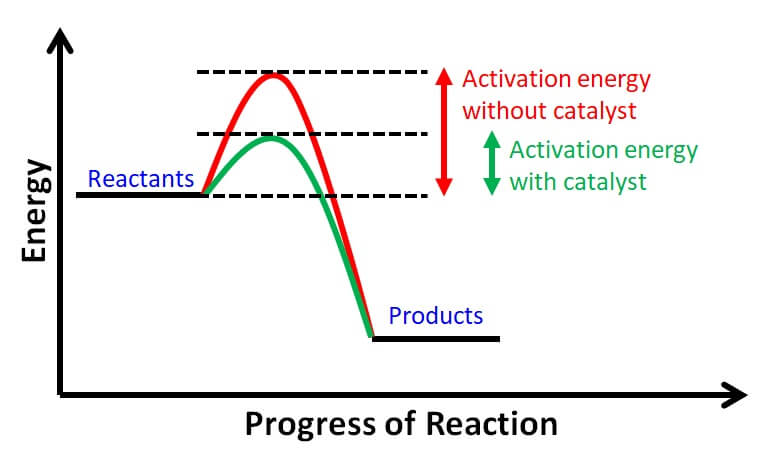
Challenges are the catalyst to growth

Just like emotions = energy in motion; just like molecules and atoms passing through the cellular wall, causing energetic exchange; just like facing a challenge in life – just like a catalyst enabling a chemical reaction to happen… just the same way life enables us to become better, more in touch with our true potential by providing challenges and difficult opportunities. The first time is without a doubt the hardest, but every subsequent attempt becomes exponentially easier. All our “struggles” are mostly such “temporary states” in a greater reaction of events.

Yes, chemistry happens not just in school, but also within us (literally all the time)

Without a catalyst a (bio)chemical reaction, in theory, ought to overcome an enormous energetic hurdle to occur. A catalyst lowers that substantially, by providing a sort of “passing-state”, a temporary, middle ground solution, from which the end result flows considerably easier/with less energy required to an end result.
Similarly, life, in terms of our experiencing provides us with “temporary difficult situations” which essentially serve as catalysts for us to grow beyond our current capabilities and help us “surpass our limits”. Almost everyone has a desire to go out and experience various things in life, we have this intrinsic wish to grow and develop (let’s call it intuition or soul for the sake of simplicity). In achieving that, we try and experience different aspects of life (recreation/sports, visiting landmarks/traveling, reading books, listening music, experiencing interpersonal exchanges, etc.) But what often happens when pursuing our dreams is we tend to distress or give up, when faced with challenging uptakes.

Why does it make us feel unpleasant?

Mostly because of the friction caused between our individual Soul and conscious Ego. During the course of our life, on the path of growth and self-development, our Ego tends to cling to the comfort zone (things that are safe and things we already know), whereas the Soul stretches out limitlessly and this dynamic causes tensions. Our souls are essentially “drops” or extensions of a universal consciousness (or you could call it “the great big quantum field of energy”, i.e.) and are in alignment with its “flow”. Whereas our Ego(s) are much more earth-bound – preservation of self, survival, instinct, logical… limited in a way. Most mental constructs/obstacles come from the later. Because the logical answer to a threat (=something making us feel unpleasant in this case) is to either avoid it or fight it. On the other hand, from the point of view of Soul, things are in unison, everything is connected and flows in its natural order. So, when we act out of balance between the two, tensions arise, which manifest as a defensive/survival mechanism of the Ego (which is still necessary for our survival and preservation, not to demonize it overly!) This usually takes on the form of fear. (If we just center ourselves enough and embrace a bit of the faith from our Soul part, we are able to overcome even the deepest fears, btw.)

What is transpiring in the background here?

 – The big energetic hurdle of an un-catalyzed reaction. “Brute forcing it” or “running away from it” doesn’t make the hill any less steep, that’s why we often end up burned out, depressed or otherwise generally/chronically ill. When we feel like we’re unprepared, we’re most likely going to avoid it or plough through it mindlessly. That’s ok, that’s a perfectly healthy response actually. But the flow of life know only one direction – forward. So one way or another, we’ll be faced with a similar or even same situation again soon enough until we’re actually strong enough to overcome it fully. The beauty and secret behind this process is, that we DON’T NEED TO KNOW when or where that will be, but instead focus on the present moment instead. In that meantime, we typically undergo lots of smaller experiences that ultimately build up our capability to tackle greater ones.

“Everything happens for a reason, dammit!”

Every “state”, every situation we find ourselves in serves a purpose. Every setback is meant to teach us something. About ourselves, about the world and reality… it’s a never ending phase of expansion (just like the universe). Our purpose is just to catch these moments, embrace them and let go of them again.

“In life you either win or you learn.”


When life gives you lemons… it’s basically giving you a catalyst

Life “putting us through the ropes” is meant as a catalytic, passing state which we can either avoid, condemn and suffer through… or take as a learning experience and emerge into our next phase of development, wiser and closer to our “true selves”, our “true potential”. Of course, all this applies or rather depends on the level of openness/mindful awareness and the ability to put that change into motion, once again – balancing out Soul and Ego. 🙏 “Taking a moment to reflect” usually means just that – taking notice of your internal and external environment in the very moment and tuning into that “voice” within (soul, intuition, even gut feeling) that gives you some information about the next step/direction. When we’re as fully in tune/in sync with THAT, we’re most likely prepared to face the challenge (again) and through all our amounted openness and experiences be catalyzed fully into our “end result” – a fulfilling feeling and a healthy, fun and loving life. 🙂💜

Featured

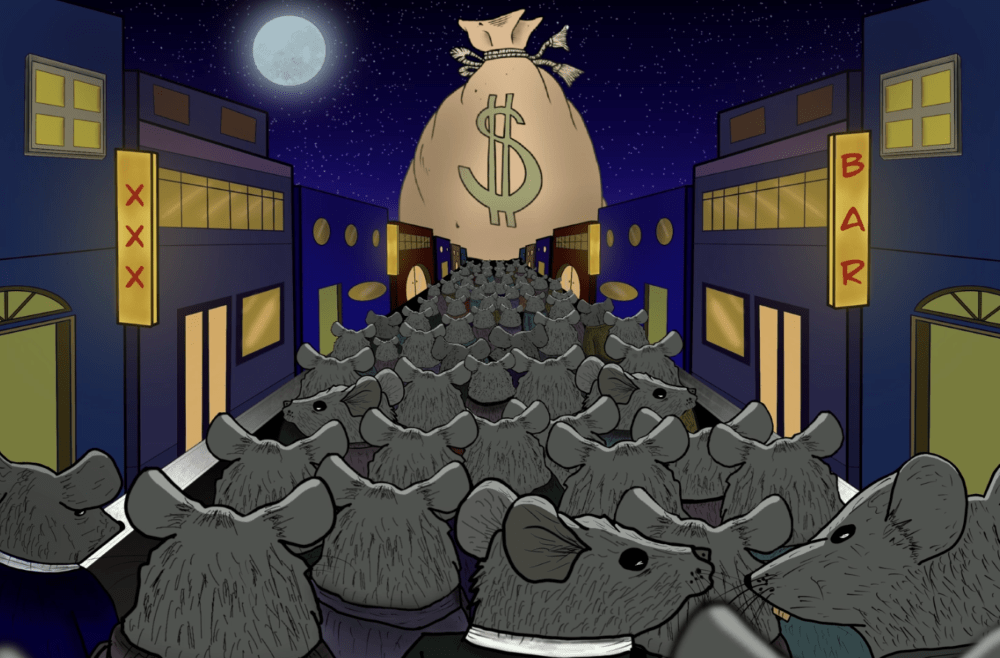
There are no winners in the great rat race

There’s always that “thing” that’s chasing us – usually it’s called “life”. It’s always going to be there. Trying to run away, running- and hiding into something, anything, doesn’t make it any less present. It may very well SEEM as though it’s being mitigated, but that is absolutely an illusory concept, that is plaguing most of the world’s population in this day and age.

Here is an interesting concept, that has been explained to me recently:
In the greater scheme of a fulfilling life, in the “duality of reality”, we are supposed to balance the flow of personality and creativity/creation at the same time, but often create a big rift by focusing overly on one over the other.

What does that essentially mean?

We’re becoming more and more accustomed to the idea, that “work” is a great basis of life, right? We can work harder, we can work smarter, but at the end of the day “doing work” usually means paying our bills, putting food on the table, offering shelter along with many tidbits to “treat” ourselves with, big or small.
We are creating our own reality, so to say. We create our own lives and parts of society as a whole. We establish a healthy take on reality and responsibility – to our selves and our environment (-actual nature, our pets, plants, housings count in this too, along with just other people around us, btw). But what is becoming more and more prevalent is the notion, that it SEEMS as if this is ALL there is out there for us…

…Is it really though?

Upon closer inspection and through the art of slowing down, stopping and smelling the roses it becomes evidently clear that there is (at least) another aspect to this scheme – personal value.
To simplify it on an example: when is the last time you asked yourself what ALL that you have/poses means to you? What does your home, car, job, health, relationship mean to you? What does your personality and general way of living mean to you? Are you satisfied with what you have and who you are? Please, take a moment and reflect on these questions.

…see? If you’re answering these questions, you’re adding personal value to all that you established with creativity. You’re combining creation/growth with meaning/value!


You know what some might call this?

Harmony, peace or balance. And do you know what this brings in the long run? Health, satisfaction, appreciation, joy and ultimately a fulfilling life. It’s right there! We don’t need to “keep on going and trucking and toiling away every day of our lives“… we just need to slow down, maybe even stop for a bit and allow our personal value, our meaning of things catch up so we can (hopefully) continue this balanced, happy lifestyle onward, step by step; with both: all that we create and our personality on a close-by level… one moment in time at a time. 🙂


Concluding: stop and smell the flowers every once in a while

So we’ve come full circle: the great “rat race” of life, that we keep pursuing, but often feel like “we’re losing”, is actually just the dissonance between our physical/created reality and our internal meaning/investment of our personal values.
Yes, you can very much work the hardest anyone’s ever worked and create a multi-million enterprise and have every materialistic thing you ever wanted or needed… but if you don’t allow yourself to feel joy, enjoyment, peace, appreciation and catch up with your personal values, well… my words would be: good luck with “trying to win the race”. 🙃


And just a little disclaimer here in the end: both, any and all ways of leading your life are ok and valid and I’m not saying any is better than the other or that you need to follow these guidelines. My intent with this writing is to caution people who might feel very stressed and might be close to or already “burning out” to take preventive care by merely just evaluating their active habits and their feelings together. Just this little act can already have a big impact in the welfare of anyone of us. My wish is for everyone to be as healthy and happy as possible. Thank you for reading and read you in another moment in time. ❤️

Featured

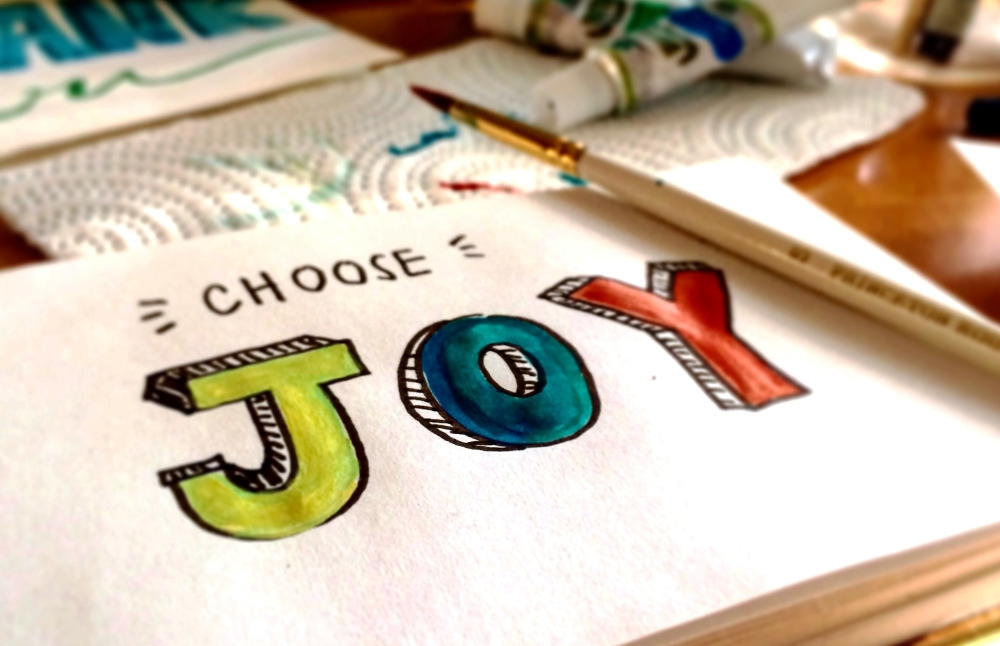
Our core intention should always be Joy

[Photo by Bekka Mongeau: https://www.pexels.com/photo/white-printer-paper-22221/ ]

Let’s try something a little bit different with this one: instead of a concise and connected, “refurbished” article I will focus more on expressing myself from the heart, and just type out what I think and feel:

What I’ve learned in the past years of self-exploration and experiencing of (actual/real) life is that my purpose is very important. What my purpose actually is, is another thing completely… but in asking that question along with follow-up ones, such as “What is important to me?” and “What is my wish for the world and my life?” things started to become ever so slightly clearer. Namely, in my case, it happened when I was doing some self-reflection exercises, where the question was asked:

“If a person you just met on the street asks you “what do you wish for the future?”, what would you say?”

My first reaction was rather typically sarcastic, “oh, another “future” question. Man, I haven’t heard one of those since 5 minutes ago…” But immediately after I was awestruck by the answer that popped into my mind.
My answer was, that I wish that people would laugh more. 😊

Just as simple as that. My friends, doing the same exercises along with me were all listing more thought out answers, like: “I wish to be my best version of myself” or “I wish to create a steady lifestyle” or “everything just as it is, but more self love and appreciation and gratitude”… and I just blurted out: “I just really wanna laugh more, y’know. That’s what seriously matters to me most right now.” 😂

But what do I mean by that, really? I’m not just saying, that I hope everyone would just laugh away all their problems and ailments. My true wish with this is that people would generally stop taking life SO f***ing seriously! Just stop emphasising all the bad news and reports on tv and internet. Stop gossiping about a person you even barely know. Stop complaining about the horrible weather, the worldly health and economic crisis… stop feeling sorry for yourself and telling yourself that you’re the only one dealing with such situations and that you aren’t capable of handling it…
Instead, just make a little joke of it 😃
“Come on sourpuss, you could mop the floor with all those tears you letting out here. When you take a little step back, it’s not actually aaaaaall THAT bad, is it? You’re doing great, it’s a good thing you let out your sorrows instead of bottling them up. Here… let’s go grab that mop and put on a swash-buckling pirate song and swab the port/poop-deck, ey?” 🤗🏴‍☠️🦜

Relatable? 😜 How about this one:
– “man, it’s way too hot outside and it’s only getting hotter…”
– “…welp, it’s only like about 4.999.998.000 years till the sun runs out of hydrogen and dies out. It’ll happen eventually and we’re already off to a good start!” 😆

My point with all this is that our individual (and collective) core intention should always be that of joy. Joy makes literally everything better. “Go at it (life) with joy“.
Got a promising job interview ahead of you? Try to joyfully explore/observe your potential future workplace and imagine yourself what you will/would enjoy (and perhaps what not too).
Did it start to rain and you didn’t bring an umbrella along? Try to find joy in that the soil and plants will get their lifeline and that farmers will be able to spend an afternoon off for not having to water their crops. (But also eventually try to find some shelter so you don’t get soaked and get a cold 😅 …or, you know, sing the infamous song about singing in the rain and splash as many puddles on your way as you can.) (…and THEN take a warm shower or a blanket over yourself 😁).

Our core intention should always and ever be joy.

Žiga Grušovnik

We’re highly capable beings and we CAN create joy even in the darkest times and most dire situations… It’s what I believe helped the human race persevere for all these thousands of years. And it’s not even bodily/physically bound! It’s merely a “quality”, per se. It’s not earth-life bound, it’s soul/energy-bound. And as we all know, energy doesn’t stem nor does it go “into nothing”. It’s always there. It just changes forms… chose the form of joy and make yourself be more joyful and happy and ultimately fulfilled. 🥰

Featured

»THE ONLY WAY OUT IS THROUGH.«

Why resist changing things when everything that is – is change? Why being resist-ful to life? Many of you probably heard following sentence already: »The only way out is through.« It means stop avoiding things and get things done. I’m wondering why it is so hard for so many people to fight for the things they want to accomplish. If you’re not a fighter you will lose every single time. You know why? ‘Cause you’re not trying.

So let’s be practical again here, shall we…

6 WAYS HOW TO GET THROUGH AND OUT
  1. FREE YOURSELF FROM NEGATIVE THOUGHTS; MEDITATION

Negativity? Just stop feeling pity for yourself and stop overthinking. Be present in the moment. Come to your senses, have focus and be mindful. It’s easier said than done right?

First of all, be aware of your thoughts that lead to certain feelings. Are they positive or negative most of the time? The problem occurs when we believe our thoughts are true (even when they’re clearly not). You see, it’s important to recognize useful thoughts and neglect the negative ones, because when you’re repeating the same thoughts in your head over and over, this leads to the same decisions, the same acts, much like dr. Joe Dispenza explains in his works “You are the placebo” and “Breaking the habit of being yourself”. Those in turn lead to the same experiences and the same feelings. This can be a big problem. Michel de Montaigne has a proper quote for this: »My life has been full of terrible misfortunes, most of which never happened«. Often times our thoughts make up all sorts of bad scripts, which then never ever happen. So don’t let your thoughts control your life, be the one who controls them.

Secondly, be aware of your feelings and your reactions to things and events that are happening to you. The most important thing is how you react. Here lies your power to change your circumstances. See, I think it’s better to be an optimist who is sometimes wrong than a pessimist who is always right. If you have difficulties with calming down your mind and concentration, try with guided meditations. In that time of introspection try to find the pattern of your thoughts, which is accompanying you wherever you go, and which you are repeating. It’s there to teach you something. It’s there to show you that you need to change something.

»We cannot solve our problems with the same thinking we used when we created them.

Albert Einstein

One of the widely known techniques to avoid negative thinking and overthinking is coming to your senses, to become mindful. Use your senses to be present in the moment. Try to focus on one thing and then describe it with using all of your senses. Look at that bird, smell that flower, listen to the wind… That focus makes you present and stops unnecessary overthinking.

  • BELIEVE IN YOURSELF; PLACEBO EFFECT

Have faith in your own capabilities and keep in mind that no one is perfect. Stop chasing perfection and try to focus on your abilities, your contribution which only you can give to the world. Find areas in which your talent can be used and you enjoy it. Be mindful that what you think about yourself will automatically affect your external world. It’s all placebo. What you believe you receive.

  • TRUST IN THE FLOW OF LIFE AND TAKE ACTIONS

»Even freedom has its own responsibility.«

May Rose

Stop avoiding responsibilities. That’s the fact. There is no true freedom if you neglect your responsibilities. If you are just a »go with the flow« person, that’s alright, but don’t forget that flow needs something to continue further on and that is what action is for. Actions affect the flow. There is no flow if you are not doing anything to help it flow further. Trust in the process of life, of course, but in meantime take actions so process can continue.

  • BRING A FIGHTER OUT OF YOU

»Rawwwr!« Yes, scream if you have to, be loud with your opinion, be yourself and feel free. To bring a fighter out of you means to stand your ground, set goals for yourself and follow them. Life is not just fun, laughter and easy moments. Life can be and also IS hard. You cannot escape hard moments, sadness, disappointment, despair etc. But don’t look at these feelings and states as an attack on you, take it as a challenge, a new possibility, a new choice and action. Always keep on trying. Everybody is scared sometimes. What makes fighter a fighter is persistence, to go after something even if it’s totally new and you’re scared of it. Don’t be afraid, go wild sometimes. It’s in our DNA.

»Having a positive mental attitude is asking how something can be done rather than saying it can’t be done.«

Bo Bennett
  • TRY, FAIL, TRY, FAIL AND THEN TRY AGAIN

As mentioned before, always keep on trying. You will surely lose and fail many times, but you know what? You will win and celebrate even more times if you’re patient and persistent. Being a winner doesn’t mean winning every battle, it means falling down, getting back up and winning the war.

»Compete not with others but with your (lesser) self. To discover potential is to challenge yourself. If you aren’t willing to be a fool, you can’t be a master.«

Jordan Peterson
  • CONNECT YOUR SELF WITH THE SOURCE; USE MAGICK

And at the end of it all, connect with nature, with your spirit, with the source. Get to know hermetic principles for example. It’s a spiritual science. Do research. Use it as a tool and watch what happens. Your life will start to change if you use a little life magick. The human brain can do really magical stuff. Ask yourself: »If I had the ability to manifest anything, what would I do?« I will put one example of 3 BASIC KEYS to use magick for MANIFESTATION. First, imagine your INTENTION in detail. Then pour all of your EMOTION into that intention. Lastly ASK the higher source for your wish to come true. You may not know how things will happen, but rest assured that they will happen. Be patient and pay attention to things.

So that’s all for this one folks. 🙂 Be fearless and find your own shortcut through. 🤘

~May Rose

Featured

DON’T FIX THE OLD, CREATE THE NEW

Let me start with the words of Steve Harvey: »Your mission, your purpose and destiny will all be tied to one thing – your gift.« So many times we are caught with thinking that if something is broken, we must fix it. Well, what you believe, you receive. What you think about, that’s what you get. If you’re not quite a fan and a master of making mosaics from broken pieces, then please, do not try to put broken pieces of the past together again. Instead, start discovering yourself. Your gifts, your talents, find your passion and creativity; what makes you feel alive over and over again? Why do we tend so much to fix the old, when creating something new is a unique seal every one of us can leave on humanity? It’s the fear of the new. The fear of one of the biggest consistencies in life – change.

Creativity as a process

A bunch of ideas and a vivid imagination are just tools to help you be creative and
productive. See, creativity is not just brainstorming ideas but a process to discover, to create, to bring something new into new form; into being. I’m going to point it out again: Imagination and ideas are not the same as creativity. Creativity is a skill that can be developed and a process that can be managed.

Linda Naiman, founder of Creativity Work, discusses that value creation as a result is combined from 4 main categories: Imagination, Creativity, Empathy and Innovation. So, creativity is just a part of making the whole value creation. What’s also important is setting goals, which must be clear and as written by many authors – S.M.A.R.T. (SMART is an acronym which stands for Specific, Measurable, Achievable, Realistic, and Timely).

George Land is one of the authors who have studied and are exploring a field of creativity. In one of his studies he came to the conclusion that we are naturally creative and as we grow up we learn to be uncreative. How unbelievable is that? But it’s only partly true. When we grow up we usually forget to wonder about things and outer world so our capacity of creativity only decreases. If we can learn to be uncreative, through years we can learn how to be creative again too.

Linda Naiman writes about Clayton M. Christensen and his researchers, who tried to study the DNA of Innovators. They discovered that our ability to generate innovative ideas is not just a function of the mind, but also a function of five key behaviors that optimize our brain for discovery. These are:

  • Associating
  • Questioning
  • Observing
  • Networking
  • Experimenting

Meanwhile, Hitesh Bhasin, on Marketing 91, points out that there are 4 different types of creativity:

  • Deliberate and Cognitive Creativity
  • Deliberate and Emotional Creativity
  • Spontaneous and Cognitive Creativity
  • Spontaneous and Emotional Creativity

Some tips how to keep your creativity level high:

  1. Regular exercise to keep your neurotransmitters (most importantly dopamine- and serotonin-related ones) in balance
  2. Listening to music (music as a key to opening up emotions)
  3. Writing a journal (writing is proven to be a very helpful tool for increasing brain activity)
  4. Reading (reading increases the level of concentration and serves as an inspiration)
  5. Relaxing (finding something that relaxes you so you can take your time and
    merely observe things and wonder)
  6. Surround yourself with creative people (it affects your beliefs and behavior)

Dreamer or an innovator?

This is just some basic information about creativity in general. What I wanted to discuss here was to dive deep into creativity.
How to use your associative memory, your curiosity and skill of observation to change an idea into a whole value creation, especially when you’re stuck in a habit of fixing the old?

Start with changing your beliefs, your expectations and consequentially you’ll change your behavior. You need a clear intention, based on strong emotions and with that you can change your expectations as well as sensing. Imagination will turn out to be just a starting tool in the bigger picture of creativity.

What’s the difference between a dreamer and an innovator? Self-discipline and working hard even when you’re not feeling it. Yes, we all need passion to create new things, but in the period when we lack passion, the second most relevant factors are self-discipline, patience and hard work. Putting ideas into practice, no matter how long it takes.

Everyone has their own timeline. Don’t compare yourself too much to others. Let them be your inspiration instead of your competition. Maybe you will need more time to put an idea into practice than someone else but keep on going. As long as you’re working on it; as long as you are not standing still, you’re putting your idea into practice which already makes you an innovator. The finish line is just a finish line, true creativity is the process itself.

“True creativity is the process itself.”

May Rose

Dream big, set your goals even higher, work hard but start by winning small. Don’t forget, small victories once become your whole value creative mission.


If you have any ways of maintaining a healthy dose of creativity of your own, feel free to share them with us and others down below. 🙂

May Rose

Featured

“Ignorance is bliss” vs. “Wanting to know too much” – the tightrope of anxiety

Simplicity has almost become a foreign concept in our lives, yet sometimes it actually vital to our survival and health. Other times we might be taking the “too simple route” and ultimately end up stagnant/stuck and disappointed aswell.
In this article I want to talk about how to balance out the two extremes that lead to anxiety: being overwhelmed by information; thinking too much (about the future, for example) and wanting to “run away from it all” and the “thirst for more” as a means to filling the void within with more and more information and details to the point of breaking.


The original principle of functioning = only one thing at a time

Our human organism functions best with one task at a time. We are “just one” so we should acknowledge that and do just one task at a time but put 100% focus onto that – creating so called “absolute focus”. Means putting all of our focus onto one task in the moment. That way we are likely achieve maximum effort and max results too, because we don’t waste our energy by doing one thing while thinking about another. In the latter case we actually divert more energy to the task that has yet to happen! In other words: “Worrying about the future makes you go through it twice” and both times energy is used up. This ties in very well with “the art of taking it with you“.

Running away is NOT a solution

Running away from everything (“ignorance”) is a form of avoidance and does give short term solace but makes things even worse in the long run. This causes stagnation and “spiritual suffocation”, let’s say. That, in turn, in the long run even builds up inside the physical body as excess tension and ultimately manifests in various forms of sickness/ailment/disease (even cancer). “Things DO happen for a reason” as we know. And so does everything we encounter. While we don’t and shouldn’t take up everything we encounter, what we should learn in moments of “overwhelment” is to take a step back if necessary, assess the situation, then take up one task at a time. Taking a step back sounds similar to “ignoring”, but I like to think of it as “ok, relax, take a deep breath… why am I getting so worked up?” See? It gives the intention of “wanting to find a solution; move forward”, whereas ignoring would sound like “oh, this is too much, I can’t handle it/it’s unfair/why me/why can’t someone else do it, etc.” There’s not much hope for the future to be felt there, isn’t there? 😅

“More” isn’t always “better” either

Wanting to know too much, on the other hand, is similar, except that we take up more than we can physically/psychologically bear. This usually happens due to our inherent “rationality” – that everything has a fixed shape and form and is “logically plausible”. But as we come to grow and learn in life that’s not really realistic, is it? Reality, life, is much more complex, highly unpredictable despite “understanding fundamentals of how things work or how they should work out”. Tie in to this: “the observer bias” – how merely observing an experiment in some way influences the outcome (due to our intuitive expectations, for example). To top it off, in my personal opinion, some things simply cannot be understood.

Or better worded: “some things don’t need to be understood”. At least perhaps not in that very moment and place, but are likely to be understood at some later point, spontaneously (aKa “epiphanies” or “eureka effects” 😉). We don’t need to always understand everything, usually we merely need to understand the point and give our minds a break with excess details and information. There is always going to be more learn out there… so trying to get it ALL is Sisyphus’ work – it’s senseless. WE are the ones who determine when “we’ve learned enough/everything” (for the moment!).

“Understanding” is not the same as “knowing”, let alone “living it”.

Žiga Grušovnik
How to get out of this cycle?

Some aspects that have high potential to save us from this downward spiral are actually really simple and can be expressed in keywords such as: curiosity, awe, openness, wonder, surrendering, unconditional love, kindness, amusement and joy, faith and trust… but all with intention! The intention behind the sentiment always matters!
In practice it usually boils down even simpler – to focus.

“Where we put our focus, we give our energy to.”

It’s a simple matter of how we perceive things – if we focus on bad things, our perception is negative. But if we focus on directing our intention to the good things, no matter how small they may seem, things are perceived as positive! It really is that simple. 🙃

The school of life” said in their wonderful YouTube video: “How to simplify your life” – “because sometimes some things and/or people are so irrelevant to us as the inhabitants of the Egyptian court of king Sneferu in the late 2613 b.c.” 🤷‍♂️

Some things are vital many others are actually irrelevant if we think about them. It just comes down to the change of perception. We humans are incredible when it comes to adaptability and change. We’ve merely keep misplacing/forgetting about that aspect to our nature. It is likely the healthiest for us to be determined, and/or hardworking at one point, but laid back and spontaneous in the next moment – we can be both! We are allowed to do so. There is a time when we should face our responsibilities, rise up to our fears and grow, but other times it’s perfectly reasonable to say: “F*** it! I feel good right now and the thing CAN wait.” 😁


Hopefully this article has inspired you to either lay back OR be productive (or both, one after the other 😄). If it did, share your inspiration in the comments – we all can always benefit from an inspiring story, even if it involves mere intentional rest! 😌
Stay balanced and I’ll see/read you in another moment in time. 💜

Featured

Wearing sunglasses with an umbrella: Bipolar disorder and spiritual bypassing

If you’re reading material about psychology, psychiatry and spirituality, you probably read some things about bipolar disorder already. Have you ever wonder how bipolar disorder looks or feels like? Have you been in contact with anyone suffering from bipolar disorder? Or are you perhaps on a rollercoaster of bipolarity too? Then this article is for you.


Many authors claim that having a bipolar disorder is similar to siting on the rollercoaster. Why so? Let me explain some facts about bipolar disorder and some of my personal experiences and thoughts on this topic.

Imagine waking up in a totally different world than you know it. That’s where depression and/or mania set place.

Bipolar disorder or so called “manic-depressive disorder” is by definition itself a mental disorder, diagnosed as the psychiatrical illness. It causes unusual shifts in mood, extreme cycles of never-ending ups and downs; it also affects activity levels, concentration and the ability to tackle daily tasks. In terms of spirituality these uncertain phases of mood and energy would probably be called “the awakening process”, existential crisis and/or shadow work.

There are three types of bipolar disorder (Bipolar I Disorder, Bipolar II Disorder and Cyclothymic Disorder). All three types involve changes in mood, energy, and activity levels. A person with bipolar disorder can feel extremely down (depression occurs) and after a while another extreme takes effect – being and feeling extremely up (high and energetic) (manic episode). That’s just a little bit of general basic facts, so you can understand what bipolar is. But let’s dive deep into practice.

So, how to live with bipolarity? How to keep balance when your thoughts and feelings are changing like the outside weather? You never truly know if it’s going to rain, if it’ll be a thunderstorm or a hot sunny day. However you can be prepared. Following weather forecasts and more importantly – keeping sunglasses and umbrella in your bag. Why am I talking about umbrella and sunglasses? Because, as written before – it’s how the bipolar extremes function. You can be full of energy wearing sunglasses on a sunny day at one moment and then all of the sudden (it can be in the next day, in the next few days, next few weeks) a massive thunderstorm hits you. All of this is a metaphor for phases of mania and depression. Mania could be described as a hot sunny day and depression as a cold rainy day. Include spirituality and you can expect foggy or a rainbow-clad day.

Many people write that bipolar disorder is nothing more than spiritual awakening. So why is it diagnosed as a psychotic disease? It’s simple. You woke up from »the matrix« probably too early and your brain can’t separate true signs of awakening from delusions of the mind, which are often stored as emotions, thoughts and traumas. That’s why bipolar is one of the hardest diseases/states to handle. How to separate awakening symptoms from delusions?

Maybe you already heard about spiritual bypassing. One of the first authors who defined and introduced spiritual bypassing, in the early 1980s, was John Welwood – clinical psychologist, psychotherapist, a Buddhist teacher and writer, known for integrating psychological and spiritual concepts.

In short: spiritual bypassing has been defined as the tendency to use spiritual ideas and practices to avoid facing unresolved emotional traumas, psychological issues and unfinished developmental steps (at this point we can talk about the critically acclaimed term “comfort zone” – the easy way out or a way to nowhere). John Welwood talks about spiritual bypassing in his classic book, »Toward a Psychology of Awakening«. There he defined spiritual bypassing as use of »spiritual ideas and practices to sidestep personal, emotional »unfinished business«, to shore up a shaky sense of self, or to belittle basic needs, feelings, and developmental tasks«. The foundation is avoidance and repression; for many individuals spirituality serves as an escape from real, »earthly« life. As opposed to spiritually bypassing, the aim of these practices is to achieve acknowledgement and understanding.

What is so special and important about spiritual practices, which help acknowledge our repressed feelings/emotions? Practices are the helping tool when we get stuck in the illusion of the mind. Emotions, traumas that are being bypassed can be a cause of many diseases, particularly seen in bipolar disorder. I suggest visiting a good psychotherapist who will help you with acknowledging the emotion and explain how it affected your body and mind ’till now. That’s one of the ways you start handling them: with trust and openness. Another thing is reading. Educating yourself about your state, your illness and finding practical solutions which suit you. Not everybody is the same. But at this point I want to point out that using spirituality to avoid, suppress or escape from issues in life is a dangerous road to walk. Use spiritual practices when you’re ready to dissolve your emotions, traumas, past thoughts; only then, with acknowledging, you can use spirituality and spiritual practices as a helpful tool to grow as a person and heal yourself.


“What you resist, persists.”

Carl G. Jung

From my personal experiences I can say, that »go with the flow« with extreme downs and ups wasn’t manageable. But I started healing myself in a very rough, painful way. Admitting my problems, opening up to someone, convincing and cheering for myself that I want to make a change in my life. It was damn hard but I made it. I still feel my mind misses these extremes of creativity and then again blue sadness, for I believed that is who I was. But I learned that this is far from the truth. So I don’t compare myself or compete with others, other »healthy wealthy« people, anymore. I “compete” only with myself, my past self, my NOW self, because I know I’m always in the process of growing and becoming the best version of myself. And that is all that matters. This is who I am. Because I am/we are not our disease. I am/we are individuals with personality, history, hopes, experiences; I am/we are everything what flawesome human beings are allowed to be – Free, but still careful.

More about useful practices how to deal with bipolar disorder in the following articles.


So… My opinion is, that we shouldn’t treat bipolar disorder so roughly. If you think about it – the heart beat itself is bipolar. Even life as a whole with its ups and downs, is bipolar. So all we can do is throw ourselves into the deep ocean’s waters of life and face the fear of bipolar waves; diving deep. Life isn’t simple and bipolar is everything but simple, but living a complicated life is what makes our living on this planet worthwhile. All we have to do is be prepared and, between all the shitstorms, enjoying all of the little moments, bad and good. Imperfect yet still flawesome bipolar life. Find your own balance, find the silver lining. You don’t have to be a girl from Prozac Nation, neither do you have to be Bruce Almighty. Just try to keep your balance and avoid extremes.

Normal ups and downs are life, not a disease.

May Rose

Let’s admit: everyone is a little bipolar. May the sun NOT shine too bright for your sunglasses and may your rain NOT be too heavy for your umbrella. Every one of us is at least a little bipolar. Your heart is still beating. Are you bipolar or aren’t you? 🙂

May Rose

Featured

“Love = Health” – how to cultivate Love within yourself and heal

Love is likely the strongest force in the universe that is well known. “Love makes the world go round” indeed, but not only that – love is incremental when it comes to healing and overall good health. But where does it really stem from? And where do we store this wonderful pool of abundance? Common sciences are only starting to unfold the power that love and good intentions can have on our health. There’s more and more research being done on the effects of intention, psychology, focus and the like, on our life, overall success and health too. Allow me to share some of my insights on Love as a healing force and offer a short guided exercise/meditation to help you cultivate your own inner spring of (self) love and health.


Can water sense Love?

While I am only beginning to look up these forces that make us be, I have felt almost a one to one link between life and water. Nothing really new right? We know that all life originally stems from the ocean, our worldly waters, correct? So, in my opinion, there’s got to be something more to it. Let’s take a step further – about 70% of our body is made from water. That’s one more telling sign, for sure. And just a bit deeper – blood – our flowing life force, as well as cerebrospinal fluid, which encases our brain and most of our nervous system, can be made up of up to 99% of water! Isn’t that as close to 1:1 as it can get in ever-changing nature? But, to calm down a bit, my point is that for easier interpretation and practical use, you could almost visualize and sense your life force as flow of blood (water) through your body. It flows within you and through you with every single breath and every single movement you make, all the time… a true miracle, I’d say. 😍

The process of healing sped up tenfold

Back to the topic at hand – our capacity or capability to love can heal or at least certainly speed up the process of healing tenfold. “Love” is a sort of construct, as it can be both thought of/about but also felt. In a way it’s very “made up”. That means we can technically “create it out of nothing/nowhere” or in other words it’s always with(in) us.
We can always tap into this pool of love, peace, hope, etc. within us and use it to help our growth and healing. So, we can feel and/or sense love in ourselves and in our surroundings too. It’s felt in our bodies, usually around the heart/chest area, but we can also “think about it”, abstractly, in our brains and our nervous system. So, if it’s in the nervous system, which is our tool to experience, sense and move, we can also use it to send love into any part of our body too.

This sending of love into any aching part of the body can have revolutionary healing effects and you don’t even have to take any medication for it. Combining focus/intention with the power of pure love can and has led to many “spontaneous recoveries” (as they put it). With enough practice, patience, perseverance and awareness, through tapping into our own inner limitless wellspring, we can become our own “healer” and overcome nearly any ailment!

[Disclaimer]: Of course, this isn’t “100% guaranteed with no drawbacks”. With any ailment you might have and any prescribed medication, you should always consult your doctor/specialist beforehand, as this is not necessarily for everybody and for every time to use. Some ailments DO NEED the help of medicine and professional support along meditation, visualization, this one and any other holistic method.

So, here’s a method that I frequently use and has been of big help and relief in my daily practice. This is a simple method to cultivate love and use it to heal or at least speeds up the process of healing of a part of your body:

  1. Sit or lie down comfortably and take a few deep breaths to completely relax. You can gently close your eyes aswell, as you please. (An easy way to focus on your breathing could be the “4×4 method”: breathe in while counting to 4, hold your breath counting to 4, breathe out by 4 and hold again up to 4, then repeat.)
  2. Do a simple “bodyscan” of your body – feel/sense your entire body: feel your head, face, eyes, forehead, nose, mouth, ears; your chest, stomach, spine… all the way down to your feet and fingertips and sense any area that you feel is tense or aching.
  3. Now, divert your focus for the moment and think about Love. Something or someone YOU genuinely love – be it your favorite food when you’re hungry, your favorite song on the radio, seeing your parents/partner/loved ones happy and smiling; seeing your pet happy and cute. It can just aswell be beautiful, peaceful natural scenery… or just general compassion and kindness in any part of the world or the whole world overall.
    Or if nothing sparks love in the moment, simply imagine a smiling face – grinning ear to ear and/or laughing from the heart. A smiley face. 🙂 😄
  4. Then return to that tense/aching body part and try to focus on it while feeling those feelings of love, joy, kindness, happiness, hope, faith; peace/ease… and visualize an aura of any color you want emanating from the affected area. (This method can be used for any part of the body – limbs or inner organs like the stomach or brain too.)
  5. Feel/imagine the body part to be as healthy as it can! Feel the loving flow of blood and energy wash away the ache. Don’t try to think about it too much, feel it more. Acknowledge any contraction and ease of tension you can sense…
  6. Throughout all of this be mindful of the feeling of gratitude, foremost, for the healing you are receiving/cultivating. You can even affirm to yourself (quietly or out loud): “Thank you for my healthy body.” “Thank you for my healthy legs; for my healthy flowing blood; for my stable immune system, for my healing brain…” You can also imagine the body part smiling back and saying “Thank you too“. 😊
  7. When you feel it’s enough, feel gratitude once more and then gently stretch out, take a deep breath or a couple, re-ground yourself and continue with your day.

You can do this exercise for as long as you feel like, whenever you feel like it throughout the day. The important part is to really feel these feelings in the moment – focus more on your heart sensing than on your thoughts/thinking. Experience/sense your body!


I hope this exercise and insight helps you overcome any ache you might be feeling. 🙂 If you have tried it already – how was your experience? What did you feel?
Have you tried any other similar methods and would like to compare them to this one? Share with someone who could make us of this “instruction” and/or comment your thoughts and experiences down below. 🙏
Other than that, be spontaneous, keep cultivating love and kindness towards yourself AND others and I’ll see/read you in another moment in time. 😉

Featured

“One “__Flow__” to go, please”

We “modern people” tend to prepare timetables and schedules for every day and while it is very useful when trying to be organized, tidy and get as much as possible done, we tend to subconsciously “organize” our feelings and experiences of said tasks along with it.

The art of “taking it with you” – what is it about?

What is the art of “taking it with you” about? In society and in in our modern lives we often get buried in an avalanche of tasks, responsibilities, expectations, etc. So much in fact, that with our human nature and biology, or shall we say – “our processing of events“, we become unable to realize, that one task has already concluded and another one began. We’ve become so accustomed to quite literally “cutting ourselves off of one deed”, to potentially save us a minute or two with the next one, that we’ve nearly forgotten to allow ourselves to “feel accomplished.” I feel that’s a big mistake as there’s a lot of unused energy residing right there.

How does that look like?

Let’s look at an example: Let’s say you work as a secretary at a booming company and have a super packed work schedule. You are in the very midst of it all. You just completed the task of managing the timetable for the team at your company and you know that you still have to make a reservation for a meeting the next week, report to the director, address the issue the printer(s) not working properly… then you even remember that you have to pick up the kids after work and get ready for a dinner-party you’ve been invited to… Are you able to recall what you were doing last, before this pile of tasks wreaked havoc in your mind?

If I may help out – you just planed the timetable. That’s where you were in the moment. Everything else is only in your mind, at least for the time being. But it’s probably safe to say, that you feel almost as if all those tasks had already transpired, correct?
Another example: imagine you’re having a riveting, fun conversation with a friend over coffee or drink, but you realize you still have to go to the post office before it closes within the next hour and then catch the bus etc. Just take the happiness of the present moment of the conversation with you into the post office and on the way to the bus… That is exactly where the art of taking it with you comes into play.

“Taking it with you” in detail:

By taking a few moments after each and any task you conclude to stop and allow your mind to properly process it, you start creating what we can call “flow”. This flow can be very useful as a “silver lining of energy” throughout your work/your day(s). If you take hold of the fact that you just planned an appropriate timetable for the team, which will benefit everyone, even yourself, and allow yourself to process the feeling that that brings along, you successfully start “riding the flow”. In this case you’d likely feel good or at least relieved, that one daunting task is now out of the way. By acknowledging this feeling of “good/at ease”, you embrace the flow… Now just take it with you. 😀 Take this energy, this feeling of (even the slightest) relief consciously into the beginning of the next task. This then functions as just the perfect little energy-boost to make it easier for you to “jump-start” the next deed. 🙂

Do this after any tasks you perform or at any point throughout the day and you’ll be riding the flow in (joyous) fashion. It doesn’t necessarily stop there – if a task is particularly hard for you and that “little jump-start” isn’t quite enough, you can always mindfully recall the feeling you got, when you accomplished another, similarly hard task that day or even any other day before. Heck even at any point in your life! This process is timeless!

Key step: consciously!

Point is to truly embrace the feeling that wound up at that time (-that’s where the energy comes from), mindfully, so you can bring it into the present moment with a similar/same energy. Essentially, to be fair, this could be done with any strong feeling. Though probably not to the degree of a good/positive feeling, for example anger and/or frustration, could be used as “energy-fuel” for upcoming tasks, too. But overall the safest bet would be to just stick to cultivating goodness.

So take a moment to be mindful between tasks, be aware of the feeling that your accomplishment brings along with it and direct it onto the next task. That way the flow of the feeling stays present throughout any task or situation we encounter and we don’t have to redirect or divert attention and focus onto a more “serious” state… a more “dry” state, I’d even say. And with that – voila, you successfully “rode the wave” of flow on a checklist of accomplishments till the end of a busy work day. 😀


So, have you found your “flow” through the article? 😛 Are you able to reflect some or any of your habits in this description? Do you see the usefulness of such an approach? Please, share your thoughts and comments in the replies and if you know anyone who could find this information helpful, be sure to link them this article. 🙏
See/read you in another moment in time. 💜

Featured

Having FUN with your INTUITION

This article will NOT be explaining what intuition is, what the origin of the word is or how spirituality and science define it (all of that will surely be in the articles to follow). Instead the key point of this article is how to use your intuition wisely and at the same time have fun with it.

Many writers, spiritualists or scientists are mostly focused on explaining what intuition is, what are the differences between “instinct”, “intellect” and “intuition” for example; how to define intuition as a learning tool to use unconscious information in our brains and how intuition is related to our conscious mind, how to properly listen to it, use it and so on… BUT very few mention/talk about how to use intuition as a tool for making the right decisions while having fun with it. My opinion is if you’re not able to have fun in life using your own knowledge and the Source knowledge, then you’re just another smartass who doesn’t know how to simply relax and enjoy the precious moment in time. No extreme is beneficial. Meditating and chanting can surely help you evolve and bring more peace to your mind but if you just sit closed up in your mind, assuredly no god will help you to use your true potential. If you don’t move and use all of the energy and information, gained through meditations, you will let your real life and your time to make a difference pass by. To live a balanced life means combining Divine with Human experience. Combining knowledge with practice. Combining seriousness with playfulness. Did you ever wonder how children learn so freakin’ fast? Or how the older as you get, the harder is to learn new things? Why? Well it’s very simple. THEY HAVE FUN, they LEARN THROUGH the GAME. Adults are often forgetting how to have fun while doing work, while learning new things. Often that’s the reason why people give up on their dreams and lose their passion.

Maybe you’re thinking that you never used your intuition before but it is actually guiding you all the time, you are probably just not conscious of it. Your intuition was also guiding you to this very article. It spoke so loud to you, that you wanted to start researching it, though this time to learn how to use it consciously and have some fun through the learning process.

So HOW to combine your wisest inner guidance with your childish playfulness? HOW to start practicing using your intuition when you’re not sure where to start and at the moment, when you don’t have enough time to do a thorough research on that topic? Or maybe you get lost every time there’s too much information to analyze? Or perhaps you’re so good at analyzing already, but you get lost when it comes to use that knowledge in real life? Let’s be practical here, shall we. 🙂

I will describe 3 methods/ways as examples, which you can use as a fun “starting point” to boost your intuition. The first one will be explained in more detail, because I believe it’s not only important for developing your intuition, but it can serve as a useful “tool” of self-exploration.

1. “Mirror, mirror on the wall, you’re my best friend after all.”

Maybe your first thought about previous sentence would sound like: “So you’re telling me I will be better at using my intuition if I become a narcissist?” Far from it. The more you love yourself and see yourself as a best friend, the less “narcissistic” or selfish you will be and you will be able to hear your intuition talking to you better. Let me explain.

You’ve probably already heard of the term “mirroring”. We knowingly or unknowingly experience it every day, with family members, with partners, with friends, with colleagues at work … People often reflect our behaviors and unresolved issues (“traumas”), which we don’t see in ourselves, are not even aware of or are neglecting it in some way, back at us. And these everyday mirrors are pretty annoying at times, right? Instead of getting angry at or annoyed by people around you, be the first person who “annoys” you in the morning.

Start your day with Yourself. This way you also take responsibility for your own life, your following actions and events of the day and step back from the “victim role”- e.g., blaming others for directing your life story. In the morning your first mirror is usually one on the wall. Why not use it for a little chat with yourself? Instead of convincing yourself how boring and tough another day will be, while subconsciously counting how many clogged pores you have, how you’re having a bad-hair-day; while you are forcibly affirming to yourself in the mirror “I am beautiful, I am worthy, I can do it” – stop for a moment and just look at yourself properly.

You should be your own best friend. What do you do when you see your best friend? You probably start with “How are you?”, “What’s new with you?”, “Are you struggling with anything?”, “Can I help you somehow?” and afterward maybe tease them with something like “You had such an amazing idea for this project but that won’t help you if you keep acting like Elsa, from Disney’s Frozen, around your boss. Speak up! Sometimes you’re such an idiot but I love you anyway.”
You are caring. You love them. You want to see them succeed. You help them see the best version of themselves. Now try to be your own best friend too. You should direct all of these (caring) questions at yourself first. Because the more you get in contact with yourself, the more you’ll hear your inner voice, labeled as intuition, answering and guiding you in the right direction.

Again, try to start your day with You. Say it out loud: What are your concerns for the day, how do you feel, what advice do you need for the day. Ask the person in the mirror what you need this day and what you want to know and the right question will give you the right answer. Your intuition and your higher self will give you the answer. Pay attention to how you feel again. The right answer will feel warm and maybe also give you goosebumps/chills, whereas the answer, based on fear, which is NOT a part of your intuition, will give you a strange feeling, like “something’s not quite right”. It can also feel similar to a stomach ache.

After you have had a little chat with yourself, finish it with a smile and a little laughter. Give yourself a wink, tell yourself a joke. Make some fun of yourself. Allow yourself to be clumsy. If you wake up early, feeling grumpy, keep in mind that “if grumpy cats are cute, you can be too.” You can take a selfie of your grumpy face – believe me, it will make you smile, if not immediately, eventually and if not you, at least someone else you decide to show the picture to. 🙂

You can repeat this talk with yourself in the evening. Take yourself on a 5-minute date with just You and conclude the day. Say out loud what are the things that you are proud of, grateful for, what you did right, in which area you can still improve … No matter how good or bad your day was, it is behind you and all you can do for yourself in that small moment in time is embracing all of the experiences while allowing your mirror to compliment you with something like: “Hey, sexy, you’re not perfect but you’re trying your best and I’m proud of you. I love you.” Believe me, in the morning you’ll want to hear that again. 🙂

2. “Oh, there it is, another shooting star, the treasure hunt is on!”

“Shooting star” in this context is just an example of a sign from the universe. It’s known/believed that, if you see a shooting star and wish upon it, your wish will be fulfilled. Well your guiding “wish fulfilling” sign, a sign that you’re on the right path, can be anything. A number, a certain shape, a feather, an animal, a type of car, it really can be anything. I’m encouraging you to find your own sign, one that often appears when you “feel right and well” (find yourself walking down the right path). Become more aware of something that’s “following” you in life, especially when you find yourself in “winning” situations. That is your sign, right there. The more you are aware of it, the more it will appear at the perfectly right time. Later on you can try looking for that sign when you are making a (big) decision in life. To start out you can take this challenge as some kind of “treasure hunt”, like: “Oh there is another fluffy white cat, another clue. I’m moving in the right direction.” Your treasure reflects your life – your happiness, your inner peace, your success and your fulfillment. I should mention that while intuition is in fact an internal guide, it also makes you notice different signs and external factors from your environment. Being in touch with your intuition and yourself will more and more affect your senses and change your perception of the external world too (As within, so without).

3. “Don’t yodel if you’re a fan of growling.”

You are probably asking yourself “What is that supposed to mean,” right? Let me explain. It means stay in touch with your personality, with your Soul, with the “music in you”. When you notice you’re doing something that is not in line with you, something that just doesn’t feel right, make up some background music in your mind, with the type of music that you really don’t like. (You can also take your headphones out and play some of that music, helps a lot).

And what is the point here? Your mind will eventually learn to connect these kinds of unpleasant situations with a sound you dislike. You will automatically become more aware of when you’re not being true to yourself and not listening to your inner voice.

On the other hand, the opposite thing you can do – when you feel good about something, about some situation, when it feels right and the outcome follows that feeling, then listen to a song you do like. One that gets your blood flowing, one that makes you “feel alive” and happy. You will eventually connect this good feeling, right decisions and positive experiences with a song/music you really love.

This is only a starting practice. What follows is this – After a while your intuition will increase, become more apparent to you and you won’t have to search for the soundtrack anymore, the music will come to you. In certain situations when you’re unsure of what feels right, the right genre and song will appear on the radio or television or any other media by “coincidence”. And you will know what to do and what your intuition is trying to tell you. Treble clef is not a key by accident. 🙂


So That’s all from this one (article) Folks. 🙂 Hope you liked it and learned something new to use in daily life. Link this article to someone, who maybe “doesn’t get how intuition could be fun” or please feel free to share your personal experience in the comments down below, if you felt inspired in any way. ^^

~May Rose~
Featured

How do you emit your energy? (through the parable of circuitry)

How do you feel? More like an amplifier or rather a converter/transformer? Perhaps maybe even as a limiter? Our various energies could be compared to the electric circuit. Why not have some fun and use this as a connection, a link, to our unique experiencing of ourselves and life. Most people can fall into one of the following categories: the amplifier/magnifier, the converter/transformer or the limiter. We could similarly look at these almost like the times: past, present and future. Let’s take a closer look at some characteristics of these.


Everywhere at once

The amplifier would be classified as a person, whose energy and presence uplifts and inspires energy and others around them. Therefore such characteristics are often tied to the future, to be better/bigger/higher/wiser etc. than at the point in time. You could probably think of at least one person you know, about whom you could easily say “he/she’s almost always the life of the party”, right? They surely “amplify the energy”. 😉 People with ample energy usually can’t really stay still in one place for too long and are looking for opportunities to move freely, grow or learn and/or DO things whenever they can. In “depressing times” this is warmly welcomed, as these kinds of people represent the best actors, presenters and entertainers, who bring an inspiring, uplifting atmosphere to the dullest of days. People with this kind of energy emission can benefit from taking in the present moment the most; really taking it easy for a little while and be mindful of the experience.

“How ’bout no…”

The limiter, on the other hand, would be a bit more connected to the past in the terms of “to avoid mistakes of the past”, perhaps. They function sort of like “brakes”, taking it slower to make sure things are done well and wholly. In times of excessiveness such approaches are invaluable and arguably necessary. For example, to that people, who are working tirelessly (“workaholics”, if you will) realize their own limitations, or better, necessities as humans – biological, emotional, spiritual beings (and/or more). Let’s take a practical example for this one: there are people/jobs that are literally looking for someone to be “a pain in the ass”. Like a person, an administrator, for example, who makes sure that the schedule is kept and deadlines are met. In a team environment and in the moment, people might really dislike them or even hate that person, but when everything is said and done and the project is made in time; perhaps even starts earning credit, everyone is going to be thankful to them. If not openly, at least surely subconsciously. It’s mostly just connected to how people perceive the situation and how a person expresses themselves uniquely. People with this kind of energetic expression ought to learn to take it easy – learn to center themselves, ground; let go of worry and bravely (but sincerely) face uncertainties that are worldly inevitable and technically “healthy”.


One thing to make clear – these types are not definitive; they are freely interchangeable and are not “bound” to any person or personality. They are actually very fleeting and can change day to day or even from moment to moment.


If we just focus on the moment, right here and now

While the two aforementioned types are mostly focused on past and future times, the last type connects them best in the present – the converter. The people, who are capable of acknowledging energetic shortcomings, a.k.a. negative energies/vibrations and turning them into better, positive ones. Such individuals are most anchored in the present moment, which is why they are able to most accurately notice/pinpoint unbalances. Given the proper education, inspiration and/or motivation, ultimately – awareness, they are also the most capable to correct these unbalances as well. That being said, they are also most prone to succumbing to the hardships and griping, uncertain natures of said unbalances the most, since they are most directly in contact/awareness of them. That is why they are also most prone to “persuasion” (=getting “stuck” in thought) from either side/time (past/future), which is incidentally where most current depression and anxiety stems from. It’s these types of people that are usually the most silent, held back, yet hold “the most potential within”, as people say, and it’s these people who are starting to step out of the shadows and into the spotlight; making the most impactful and earnest changes in their own lives and, given the strength, also in the world. But again, it mainly comes down to what kind of upbringing they have/had, their inner strength, their willingness to be open and overall positivity/optimism to tackle challenges and earn new experiences. Basically converters should simply continue being themselves. Strengthen their resolve and faith whenever possible and just continue on their own path, while learning about/observing the other types of “energy emission”.

If you are interested to know more on the topic, read more on energies of character here. 😉

What type would you say you are? 😀 Did any of this spark new revelations in you? Were you able to identify with any particular aspect? Can you think of any people you know, who fall into any of these categories? Share your thoughts in the comments below. Read/write you in another moment in time. 🙂

Featured

“The truth lies in the verbs!”

To understand something is one thing, but to act on it is something different entirely.”

Each verb withholds in itself “an act”, a deed, a movement, happening, energy; In regard to which verbs we come to use most frequently our reality/our life responds to them accordingly. It is important to learn “sincere/earnest (self)-expression”. No, not only grammar and the native language, god forbid the scarce school subject, but true, “from the heart” expression. Saying just that, what we truly feel each within/for ourselves. (Earnest/sincere) self-expression is very important for achieving your goals, pleasant relations and last but not least healthy wellbeing.


“But I know how to express myself already… don’t I?”

Let’s look at an example: what do you use more often: “ugh, I am so angry!” or “ugh, I feel so angry!
Did you sense the difference in these expressions? The first one subconsciously takes into account our state of being. By doing that, we thoughtfully/logically identify our current state with the feeling of anger. See – “I am so angry”. I think it’s fair to say that you/we are much more than just the feeling of anger, even in the moment of the outburst, right? The second expression resembles the actual truth much better: “I feel angry”. We can quickly take notice that we feel something “outside of us”, only a PART of us, our entirety/wholeness. With that we come much closer to the actual truth, namely, that in the moment of sensation we merely feel an emotion/a feeling, which is nothing more than a part of everything that we truly are.

Now, in the moment of affection it is hard to divert the flow of our spontaneous (yet learned/acquired) response, of course, but looking at the bigger picture, in particular if we were subjected to such incomplete form of expression in our early childhood years, this can lead to lighter or even heavier forms of ailments/conditions/obstructions in our lives (like various forms of depression, for example; which are nothing more than the end result of identifying and/or subjecting ourselves to our emotions). What usually accommodates such occurrences is, that even our surroundings, the people around us, get involved. Then we tend to hear people say things like: “why are you so angry?” Again, looking the broader state, our immediate surroundings are usually even more generalizing and then we can hear even: “why are you always so angry?” The information of time constriction is being added on top to the already flawed perception of identifying ourselves with our emotion and our minds are set for a loop.

“So… I shouldn’t express myself at all or…”

OR, in an ideal case, the same thing can help us reflect on ourselves, so that it becomes easier for us to hear our way of expression (and potentially change it, thereafter). Nobody is always like this or always in the same state. That is just a simplified perception of our minds for the purpose of “quicker communication”. We people are highly adaptable beings and we are capable of change even from moment to moment (consciously or subconsciously).

Feelings are one of the many forms of energy

Emotions are simply forms of energy in motion, scientifically speaking (“emotion = Energy Motion”). On their own, they don’t incorporate any meaning or “purpose”. We are the ones defining those aspects, ourselves. Therefore let us learn earnest/sincere self-expression; let’s be conscious of the things we say, how we say it and what we really feel, so that we won’t need to compare ourselves with “mere bursts of energy” – with our emotions and feelings. That way, our conversations will become much more engaging, wholesome and fulfilling.


How, would you say, do you express yourself? How conscious are you about your way of expressing yourself? Do you have any examples of “proper self-expression” of your own? All stories and insights are welcomed in the replies below. Until next post, have fun playing around with using verbs and I’ll see/read you in another moment in time. 😀

Featured

“Nobody is perfect.” “Good thing I’m a nobody.” – Talking about perfectionism

Coming from the saying in the title, I feel like that sums up the point of this article very well. “But does it really?”, comes to my mind out of nowhere. Being a considerate and open person, I take it from there: “ok, so how could it be better?”. As the doubt, that sparked up at the beginning, gets bit by bit more of my attention, so do more thoughts and possible options start arising – one by one, more and more, until it inevitably becomes and avalanche, that buries my original creativity and leaves me crippled, anxious, frustrated or annoyed, to only name the most common results. Does that sound familiar to you? If so, chances are you’ve likely strived to “be perfect” at some point or even on a regular basis.
I’m describing the crippling effects of perfectionism. As humans experiencing life, with our multitude of layers and complex aspects, we’ve somehow started to incline towards “being perfect”, in one way or another. In this article I want to talk about perfection(ism) and some of my experiences and insights about it. How it can go from simple desire to “do better”, to subtle overcompensation, to a gnawing irritability, to (potentially, if unattended) full blown extremism or more accurate: dangerous (fatal) illusion. Um, let’s read on to hopefully avoid that last one… 🫢


Now, “be perfect” isn’t quite what people usually mean when we say “be the best that you can be” or “be the best version of yourself“, just to be completely clear. Everyone of us innately is already perfect (speaking from a more “cosmic” perspective), but also our individual perception of “what is perfect” vastly differs from one another. So let’s start out by taking a look at what we’ve “objectively” begun to comprehend as perfect: for example, the first response that comes to my mind would be: “someone is perfect, when they have a well paying job and successful career, a big house and nice car(s)/things, a perfect family…”. Would that resonate with your very initial thought of perfect too? If we take a closer look at that (very text-book) example I gave – everything mentioned stems from outside the person who is supposedly perfect. That is a strong indicator of how very materialistically we’ve been conditioned to view our reality. It is just this line of thought like “when I have [this and this], my life will be perfect” that is causing most of todays mental- and general health ailments, like stress, burning out, depression and chronic fatigue (not to mention the very cause of OCD and similar mental disorders). That is because we are still inclined to relentlessly achieving our goals, mostly “just to have/possess something or be in a position of (seeming) power and/or control”, forgetting or even dismissing our health and emotional/psychological or even societal wellbeing. It is a very “ego-based” thought pattern, friends. One, as we know, that doesn’t have an end to it. At least, not a very uplifting one, if left unattended.
Luckily, as human consciousness is starting to expand (rapidly, I might add) and as we are coming in contact with our more spiritual, creative, gentle and conscious/aware nature, there’s an increasingly more emphasis on the more “core” values, like character, interaction, good intention, being open, etc. that are slowly but surely filling in the gaps of a much more complete version of “perfect”. That being said, let’s try to break down perfectionism a little further nonetheless and explain how “the good kind of perfectionism” differs from “the rather bad (arguably dangerous) kind of perfectionism”.

Different kinds of perfectionism

By “the good kind of perfectionism” I mean, that the better version of perfectionism is the one that encourages us to strive for “a little bit better”, “do just a little more next time” and the like; pushing or rather extending your comfort zone in an appropriate way, helping you reach your true potential. That is a very healthy approach to growth, both personal and general. In this form it is highly encouraged and a very useful skill/trait to have, when achieving your goals. In practice it would be easiest to explain with using someone as a role model – to have someone to (temporarily or situationally) measure up to. That someone should be a healthy perfectionist too, of course, ideally. Lots of successful sportsmen and women, for example, have had this form of healthy perfectionism in their toolkit when they were reaching for the top position and still keep practicing it to-date. A lot of them even attribute the most relevancy to that trait as it ties in closely to necessary consistency, aswell. This is also one way of how comparison isn’t necessarily a bad thing. It can have benefits when knowing your limits, of course. All in all, this form of perfectionism is very grounded and can be thoroughly beneficial in many aspects. A different story is the “trap of the mind”, the other kind of perfectionism.

The “not so great” type of perfectionism

I’ve heard an interesting saying about success and/or successful people, that I tend to frequent when starting to dwindle down to the bad/dangerous kind of perfectionism: “winners focus on the goal/getting better, while losers focus on winners“. (I’d put the spiritual/growth term as “getting better = elevating themselves while having fun”, personally). When we focus too much and measure up too much to someone or something, our reality starts to bend into illusion. It becomes realistically unfeasible and out of (realistic) bounds. Through our illusory/ego-based perception, our perceived “goal” becomes limited to solely “being as good as or better than that winner” or “just possessing that thing” or “achieving that state/feat”, without much of reasoning and conscious effort behind it. By that our actual goal becomes shrouded in a foggy image, being completely dismissed and of course it’s to no surprise that we are then unable to accomplish it and ultimately suffer (and complain) even more, when we “fail an un-winnable battle”. This kind of perfectionism is very ego/materialistically driven, as mentioned before. Luckily, again, with increasing awareness we are starting to see through this mind trap. One way of breaking this cycle is to ask yourself: “what do I really want to gain by being perfect in this case?” or better: “for what, within myself, am I trying to compensate with this excess perfectionism?”. The root cause of this is usually an unbalanced sense of safety, belonging, acceptance or pride of yourself. Only by acknowledging this emotional or psychological instability/unbalance can the root be properly tackled. Ask yourself: How can you better meet this need without trying to be perfect?

“Perfection is a myth”

At the end of the day; at the end of everything/time, every single one of us is perfect, just the way we are. That is individualistically speaking, of course. But just like “the law of accumulation” (as I’ve just now learned, that it is in fact a factual thing!), which says something along the lines of: “every great (financial) achievement is an accumulation of hundreds of small efforts and sacrifices that no one ever sees or appreciates“, this has greater meaning. Something that goes somewhat ignored nowadays (or silently follows the entire time) is, that:

“A good, well built, strong and prosperous community/society is built from/through many good, well built, strong and prosperous individuals.”

Žiga Grušovnik

= again, every single one of us. (There is a consideration of “individual vs. society”, even in an evolutionary concept, not to be dismissive, but for the time being, I’ll leave that to those, who work directly with/on that or for another discussion/article). It is only through our own (learned/acquired) perception that we start overcomepensating, competing and trying to reach “perfection” (=an illusion) by overthrow each other instead of growing together.

It always helps to have solid footing beneath our feet – our dance(ing) of life, experience and souls becomes much more magical that way.” 😉

Žiga Grušovnik

The saying “Be the change you want to see in the world” hasn’t come more handy – as we, together, still form society it is in a part reflecting our own perception back at us: when we see society or our surroundings as faulty, negative, destructive, “imperfect”, that just might be what we “perfectionalistically” see of ourselves. Instead be “the your perfect version of yourself” and your world-experience is sure to turn into your example. 🙂


What is your take on perfection(ism)? What is perfect for you? Did this article send some senses spiraling due to it not being perfect? 😛 Have you learned to tame it and are using it to your advantage? Or are you perhaps struggling with it? If you are, or know anyone who is, be sure to contact us to assess your situation better and prepare footing, from where you can change this habit into a useful trait.
Until next time stay safe, grounded and I’ll see/read you in another moment in time. 😀

Featured

“Energy(-ies) of character“ – how to identify your nature

You can’t make use of a map, if you don’t know where you are on it.

Žiga Grušovnik

How would you describe yourself? How do you usually feel and how would you say you generally experience the world and your life? If we simplify the matter: would you say you’re rather gentle or dominant? Or would you perhaps say “mixed”? Any answer is correct and they are definitely interchangeable, as is life overall too; and none is “better than the other”, don’t worry. Being human can be immensely complex, if we make it so, but if we start out simple, we can see, that people pretty much always show their true nature – in their appearance, the way they act, how they interact, react, etc. After we break it down to the core, it usually comes to two sides (“natures”): either you’re gentle or dominant. Allow me to explain further:

In my life changing learning/teaching course – after I had fallen ill to depression and anxiety and sought professional help (to no avail) then “by chance” found someone who could and DID help, along with the opportunity of a lifetime – my mentor established and explained the perspective of character energies. Initially he remarked these energies in a comical/ironic way, saying “you’re either the driver/coachman or the passenger”. And when elaborating the “mixed” energy, I added “…or you’re on your own, on foot“, to which he laughingly nodded. These natures come with their own perks and drawbacks in all cases. Let us take a closer look at these notions and explain how knowing your characteristic can potentially help you understand yourself better and even help you progress forward in life.

Different types of character: Gentle energy

We used to classify these energies to male and female energies too, but they are generally very similar, so we’ll just mention them in general. Let’s start with the gentle energy: as I originate from this one too, speaking from experience, people with gentle nature tend to be easily overwhelmed. By pretty much everything. That’s how I would put it in one sentence. You can also imagine the sensation as “delicate” (that’s actually a better expression; since I am translating this from my native language). These are people stemming usually from families/parents, who “did everything for (instead of) their kids”, inadvertently preventing them from acquiring authentic real-life experiences. Overall, these people are prone to rather psychological, mental and spiritual sensations in comparison to dominant energies who are typically more prone to physical stress. Delicate energies are also very “leadable”, meaning that they are insecure about themselves and therefore believe and follow others (usually dominant energies) quicker. Delicate folks also struggle a lot with self-expression. Silent/held-back/distant and “background” are common terms within all “delicacy”. But through just that they tend to make excellent observers, creators, teachers (-when they learn (how) to express themselves), analysts,, therapists… basically, people with gentler energies hold their unique “warmth” and “purity” within them (something the world largely needs and always benefits from). It’s these energies who sense impending changes and fluctuations the most and the soonest, but, again, are also usually “overshadowed” by them aswell.
The best thing people with this energy can do for themselves is to re-affirm themselves as individuals, putting themselves first (non-egotistically), being gentle, caring and accepting of themselves, just as they are (But without being “babied” too much! That’s a case of “dangers of comfort zone”, which is a whooole other topic…). Then ultimately express themselves/share their warmth with others and “reconnect” (the world, for example 😛 ). That’s a short summary of what makes up “the passenger“-energy. Next, on to “the coachman/driver“.

Dominant energy

Dominant energies: these are like a polar opposite to delicate ones – they are highly assertive, in the forefront, usually louder, upfront and direct, “tough”… but through all that also prone to arrogance, relentlessness; demanding, apathetic, egocentric or ignorant, to not take it further. They also put extreme focus on materialistic aspects as well as looking to “prove themselves” wherever, whenever possible. BUT, dominance is not as bad as I made it sound, don’t be mistaken. Despite being inclined to a lot of negative aspects, these are some of the most hard working and successful people in the world. If you want to learn work ethic, dedication/devotion, the good kind of perfectionism (and sometimes the bad one too), you’re likely going to turn to a person with rather dominant nature. It’s also strong people like these, who make the most impactful “hard-hitting decisions”, both in the personal sphere as well as in business and ultimately “the world at large”. That’s why these kinds of people make (arguably) great politicians and leaders, chiefs and directors; basically leading positions simply require a strong head who takes charge. From there the naming of “coachman/driver” – at some point we all need someone strong to take the wheel and lead us, when we’re too afraid or held back (as delicate energies, for example).
Through their tendency to “overwork themselves“, dominant energies are highly prone to burning out. Physical and mental over-exhaustion is a common side (or end-) effect that ails these energies and when ignored for a while, it frequently doesn’t just end up as a mild case. When our physical body is already being gnawed upon, that’s already an alarm going off, but when it’s even dismissed on top (ever so slightly), it usually bursts out in heavier cases. With dominant energies that can be in the forms of (chronic) back- and spine-pain, bodily tension (fibromyalgia), even to cancer of various degree, if not addressed for years, for example.
To prevent such extremes, god forbid, people with tendency to dominate have to balance out their devotion to work and material safety with a healthy dose of relaxation, mindfulness and not forget about their own needs and feelings. “Opening up“, to themselves and the world and loosening their rigidness or “traditionalism” – trying something new – are some practical examples of how to do that. Regardless of dominant or gentle nature, we are all “still just human” at the end of the day. 🙂

“Just the right balance” – mixed energy

Speaking of balancing – that’s pretty much exactly what a “mixed” energy or nature would be perceived as. A healthy balance of delicate and dominant. Being strong and devoted, when making decisions in life, taking on tasks and responsibilities and then being kind, gentle, in touch with oneself in times of merriment and calamity. It’s this balanced energy that incorporates true earnesty – being stable enough to develop from/upon and clear/level-headed enough to see the truth in things. Unlike dominant energy, which can be highly charismatic too, mixed nature possesses sincere charisma – stemming from inner warmth/compassion and earnesty/sincerity/purity (translation shortcomings!). Though not even these energies are completely free of restraints – it’s these people who tend to feel most insecurity and fears as they are quite literally “on the cusp of dominance and gentleness” at all times. It’s these individualistic, “free spirits”, who are prone to the biggest and harshest feeling of fear, which often tends to be even emphasised through illusion (-false beliefs from upbringing, for example) and/or are inclined to succumbing to their comfort zone, which leaves them feeling “stuck” and lethargic.
That’s pretty much it. “The person going on foot, next to the bus/carriage with the driver/coachman and passenger(s)” 😛 . Not much more to add to the mixed energy. This is the “status-quo”, dare I say, which we all ought to strive towards. It’s these kinds of energies, that make the most individualistic, ingenious, innovative impacts on the world and life in general. These are usually the passion-driven, silent heroes (“we don’t deserve”), who, just by doing their own thing, make an impact on their personal life and possibly on the lives of others too. Lots of newday influencers are wonderful examples of mixed energy in practice.

Benefits of knowing your own energy

In conclusion, knowing our true nature, in simple terms of gentle, dominant or mixed can very much represent the foundation of our life journey. The better we know ourselves, the better we know what we’re most suited for and how to take on things that we are still yet to be/become. From my observations, we’ve recently begun to strongly adapt the style of:

We know where we’re going, we know our goal and that is good. But if don’t know from where we are starting out, where we are right now, our goals are always going to remain distant. The journey only starts by acknowledging ourselves, our state and direction in the moment.

Žiga Grušovnik

Which is the root cause of most modern day disorientation, apathy, prevalent “fear of the future” and many other unpleasant feelings we come across.
It is ultimately the culmination of the smallest moments that lead us forward. We only need to acknowledge them, feel and experience them when they arise, then just release them, move on and before we know it, we arrive at our dream-life. (Who would’ve thought that life is a series of moments?) *wink* 😉

There is much more to this aspect of basic human natures, like how they interact with one another, for example, but this article was meant to simply outline the balance between opposing forces/natures.
So, would you say you’re rather of gentle nature? Perhaps you found some joy in that you feel more comfortable being dominant? Or are you even more startled yet excited to know more as a mixed natured individual? In any case, all comments, thoughts and responses are welcomed! In the end it only matters that you accept and appreciate yourself just the way you are. If you don’t quite feel that way, contact us and we’ll see if we can help you get to know yourself better.
See/read you in another moment in time! 😀

Featured

Answers are silent and come from within…

When you can’t go out, go within.” – is a statement/quote that strongly resonated with me as it is, but even stronger now, in these times of epidemic. (This is a translation; original text published in the Slovene language, on my facebook profile/page.)

If there was ever a time to calm down as much as possible and take some time to ourselves (be it only a moment 😉 ), to acknowledge and reflect on ourselves, our life and the state of our surroundings, it is right now.

“Whenever we can’t go further out(side), we can always step deeper into ourselves.” Just as we are aware of how big and endless the universe is, the very same is true for our inner experiencing. Take our personality, with all its aspects; our soul, which connects every living moment; ultimately even every cell in our body contains and accumulates tons of information, possibilities and (random?), activities, as recent research on quantum physics suggests, for example.

Therefore let’s us use this time, “when pretty much nothing is going on”, to break through the barriers that have and keep holding us back from our personal truth, our ability to love limitlessly and our true passion for life.

If we were living in fear, “that we shouldn’t be so distant to others or isolate ourselves from family/friends/society overly” (newsflash: that’s the exact reality we’re living right now!), then right now is the best possible time to let go of almost everything and everyone around us, that, arguably, somehow supplies or takes away energy in this “(socially) connected network” and look deeper into our own selves. It may sound “dark”, but yes, even our closest ought to be “released” from our (personal) energy and allowed to feel their own energy for themselves (and possibly look into themselves on top).

And NO, not “release/disconnect” as in “let them go/chase them away, not wanting anything to do with them”, but simply “let go” – meaning to allow the process of life do, what “has to be (done)”. You could also say “que sera sera” or “surrender to fate”, if that sounds more suitable to you. Anyway, simply put: to put all our focus/attention exclusively into/unto ourselves and our internal events.

Right here, inside, is a place of pure silence, peace and clarity. We just need to learn how to access it within ourselves. Even if we don’t know how (yet), the time is perfect to do just that too! At least try, if nothing else… Any time spent on learning (or attempting) something new, with every single “slip-up”, is always well spent as many (successful) people can vouch.

Even in these “isolating times” we keep having more options to choose from: either we become aware of the situation as it is, we don’t change all too much and keep on complaining (-“pitying ourselves“, “become a victim of being a victim”). OR, as mentioned before, we acknowledge our unhappiness and then DO something about it – as another wonderful, topical, saying goes: “overreacting is still better than non-reacting“. Or my interpretation: “any response is still better than feigning ignorance”.
Of course every start of something new is scary in some way, shape or form, but from just about every single “mistake”/fall that occurs, if we are inclined to being open and prone to learning overall enough, we can acquire something new and ultimately, step by step, fully accustom the desired knowledge.

In any case every one of us has someone “at their service”, who can help us to new discoveries and findings. This is happening more and more, as I’ve noticed – despite the increasing “confusion and misinformation” there’s more clarity, direction, advice being created/crafted. People seek and need “answers”, though these often linger within ourselves. That being said, it is never redundant to ask for advice or direction, or even simply to express/voice our sensations or experiencing (we all do it 😉 👍), but we have to be focused on reflecting our true selves first, as earnestly, directly, truthfully as possible.

And thanks to technology (and of course, all people/workers supplying us with basic necessities in these times 🙏), someone with clarity and guidance might be waiting behind the corner (or just a few clicks away) from the answer/solution… 😉 . As one of my friends put it perfectly:

Follow your heart, or, for starters, someone, who’s already doing it.” ❤

Ines Šinko (Hvaležnost duše)

What are you doing in times of (physical) distancing to stay grounded and keep the faith? How are the current worldly circumstances affecting you? If you felt inspired or reflected on any aspect, please reply to this post, I love reading uplifting stories 🙂 . Stay safe, stay healthy and keep the faith, friends! See/read you in another moment in time! ❤

Featured

“Quantum physics in one moment”

While (re)reading the book, “You are the Placebo” (Joe Dispenza), the chapter about “the quantum mind, to be precise (the shortest chapter in the book, ironically), I was actually quite endeared coming across the sentence: “the quantum model dictates, that all possibilities already exist in this moment…”. Of course, coming from “A Moment in time”, I was highly motivated to express some of my considerations and findings (opinions, really) on this topic in an (this) article. ^^ So, let’s chat a little bit about the leisurely topic of quantum physics and how it can help us create the best moments in life…

Our frequency/vibration; our energy is based on our current “state of being” (our thoughts + emotions). When we elevate our vibration/frequency, we become more aligned with the quantum model of reality/physics, as opposed to when our vibration lowers, we become more rigid/firm/“material”, which is the state/concept “classic physics”. Referred to as “Newtonian model” aswell, we’ve been using it for a long while and is the one on which the mentioned concept of “matter” is built upon it (-defined on characteristics like: it’s measurable; seen, felt and/or heard; within specific time and space).

In the energetic (quantum) model time and space represent merely possibilities/options. There is a lot more “additional/free energy” to be used/tapped into, which is why, again, elevating your vibration allows you to create changes and achieve anything you wish in life. Through that raising of vibration, changes an progress ultimately manifests in reality as your accomplishments (or failures, if your intentions aren’t in line with the faith/energy you give off).

The more you are creative, inspired and open (speak elevated); the more you are in a state of energy (and less in finite/defined/constricted matter), the easier it is to use that energy to manifest/create/cause a change in your life. And as we well know “change is the only constant in life”. Nature itself changes all the time. Add to that that “there are no mistakes/coincidences in nature”, “nothing gets wasted” and/or “everything happens for a reason” and you already have a very solid reason to tap into your faith (energy). Trust in the process of life, “surrender” to the flow, then just feel, think and do (“FTD”) good and change will manifest itself unto your life like a calm, sublime breeze or soothing ocean wave.

By joining information (=thought) and frequency (=emotion) and with that elevating our state of being, we cause an effect in matter. Of course our conscious/subconscious mind plays an important role here too. To take a practical example: if you were to combine a thought like say: “I want to learn to play guitar” (-information) with a feeling of high intensity, like excitement or inspiration (-frequency), the effect that could/would cause in reality (-state of matter) would be that you go pick up a guitar and start learning to play. So, again, through combining information with frequency you directly cause a change in the state of matter, which ultimately leads to change and by repetition to greatness and a good life. It’s that simple 😛


…how much of that was actually “simple” to you? ^^ Which parts caused you to stop and think for a moment? Do you have any thoughts and considerations or theories on quantum physics of your own, perhaps? (THAT I would love to hear/read!). Or if you simply felt intrigued or fascinated at all, please leave a comment and express it 🙂 Have an energetic day! See/read you in another moment in time! ❤

Featured

The subconscious mind – the best “YES-man” ever

Just how aware or mindful are we in the moment, when we are acquiring new information, new knowledge, learning a new skill? How do we determine when we “know enough” to do it right and well, without little to no thought? (-rhetorical question actually, we don’t “know” per se; at that point we just “do”).
For example: do you remember that moment, when you learned how to ride a bike or drive a car? The up-and-down-process likely went in either one of two directions: either “hey, I’m getting the hang of it! cool!” or “oh darn… this sucks, I’m not good at this!”. If you went like the first instance, it’s likely that you are driving around in/on your vehicle comfortably, by the way, automatically. If your experience went less smoothly or uplifting, then there’s a high chance you are still experiencing the same “struggle” anytime you confront the task, correct? How often do you catch yourself with the same thought (“I’m not good at this”) in those cases? See – the same thought arises, because the “operator”, your subconscious mind, is still in the same operating mode. It’s just doing its job of being our personal best YES-man (whom we never asked to be that, really). “Shall we take a look deeper?” “Yes“, said the subconscious…

While leisurely reading articles on various topics, I came across the fun sentence “your subconscious mind isn’t very smart!”. “Of course it is! It knows everything, even some things my consciousness doesn’t!”, I thought to myself. The second afterward, when my ego-driven consciousness went from zero to a hundred and then back again, I realized something with more truth to it, as I thought “wait, it really isn’t that smart, I mean it accepts ANYTHING I tell it”. That’s where it clicked, that it is very much performing the role of a “yes-man”, almost completely naive to the concept of “true/false”.

Many times we come across the saying “your mind accepts everything you feed it”. That speaks directly about the subconscious part, which doesn’t really have a “filter” through which thoughts pass. To compare it a bit clearer: the conscious mind, on the other hand, has a veeery strong filter present, namely what is commonly referred to as “our ego-self”. Now, there are disputes out there, that “ego is evil” or an obstacle, we absolutely have to conquer, but fact of the matter is, that we very much NEED this filter of ego to function well in this life, in this world, time and place. That being said, this same filter, as necessary as it may be, is still the major cause of many modern turmoils and tribulations. Those, which the subconscious doesn’t have to deal with… because it just says “yes” to everything.

Examples of thoughts like:
I am bad at [subject]” – mind: “yes, I am“; “I will never get a job” – mind: “yes, that is correct“; “People keep telling me I’m lazy” – mind: “yes“… any situation, really.

Point is, that it doesn’t filter any thought, it simply accepts it. But it doesn’t stop there. Our mind, as a whole, is inclined towards automating processes as much as possible, so it doesn’t have to strain itself that much each time it in contact with a familiar situation. This “automation” is more prevalent than ever in our modern, high-speed, “quick living”-times. From that aspect too, the need and use of mindfulness and awareness is appropriately encouraged.
The automated thoughts then tend to become so repetitive and rigid, that they turn into “rules” of the mind, which we keep repeating to ourselves until they become “our truth“. Not our “true truth”, but one we have convinced ourselves to believe. (There is an inter-play of the conscious and subconscious here, but we will go into the details of that in another post.) Just like the subconscious mind helps us with learning new things, it also tends to obstruct us when we repeat negative thoughts/comments, inadvertently. Another good example of balance in daily life (aspect of duality).

The silver lining here is, that just as “easy” as our subconsciousness repeats and automates negative thoughts and responses, it can do the same with positive and uplifting ones. If we return to our example from before, whenever you catch yourself on the verge of thinking or saying something like “oh, I’m not good at this”, if you can, stop yourself in that moment. Just interrupting the thought is already a big step to practicing mindfulness. The next step would be, again, if/when you can, to replace that negative one with a more positive one, like maybe “it’s been a while since I’ve tried last…” or “it can’t be that bad, let me try again” or “I know it seems scary, but it’s going to benefit me”… keypoint with this aspect is repetition. This is very much a learning process. But once you repeat it enough times, you can rest assured, that your inner best yes-man will be at your service to help you make the change you are undertaking. 🙂

“Your mind will always believe everything you tell it. Feed it truth. Feed it hope. Feed it with love.” ❤

How does your inner yes-man suit you? Did you perhaps realize a negative thought you are/were subconsciously repeating to yourself? Do you have a story of learning, where you used similar practices, that you would like to share? If you felt inspired, amused or entertained or intrigued in any way, please do leave a reply. 🙂 Thank you for reading and have a pleasant day. ❤

Featured

“Power is nothing without control” (and other examples of balance)

What do you think of when you hear the word “balance”? A person balancing on a tightrope? Standing on one foot? A monk sitting in a temple meditating? The taoist symbol of YinYang? Equilibrium? Perhaps a weighing scale? Or maybe “something I don’t have in life”? How about “the state between two (opposing) forces”?
Well, that last one just might be close to what I’m trying to convey – duality is an aspect that is very strongly prevalent in the modern world, but its effects are only subtly noticed. Let alone it is even an integral part of the old, but still truthful and potent Hermetic principles! “Duality is simply a matter of degree (and perception). Instead of being opposing, it’s actually complementary“… Sounds confusing by now? Yeah, that was my first impression too, but as soon as I put some thought into it…


Starting out – if I try to cover my train of thought for the inspiration for this post in an understandable way… The initial inspiration came to me, while I was re-reading a chapter in dr. Joe Dispenza’s book titled “You are the placebo”. While my main focus was merely to revisit some findings on the effects of the power of thought unto daily life, I paused at the consideration, that “our experiences are neurologically vown into our brains (they evoke thoughts) and chemically vown as emotions (they evoke feeling)“. My immediate connection there was: “how can one and the same thing be involved physically (/neurologically) and chemically?”. But that was only the initial provoking thought. A series of connections with my preceding knowledge unfolded and in the end I had gathered up a few examples of physical, (likely) meta-physical and/or psychological cases of “never one without the other”.

One example is already appropriately explained in the very same book, namely how thought and emotion together form a temporary state of being. There’s a strong chance that you’ve already experienced the struggle of “heart vs. mind” first hand in your life (as it is an important part of growing up) or if not, you’ve probably come across some of those quotes/ideas, like “follow your heart, but take your mind with you“. So coming from there, is there a definite answer to that struggle? As mortal humans, we are inclined to either side, very much in our nature, of course, but taking a step back we see that “a balance between the two” is probably the best answer we can hope to get. While some cases indeed call for one side over the other, there is almost never a case where it can be 100% one-sided.

Well, that was the first, somewhat common example, but the main take-away that got me utterly fascinated, was the finding of how strongly intention and faith are actually linked and complement the above finding, behind the train of thought and emotion (~state of being). A thought is the form information takes on in our mind, essentially, but only with the correct “charge” (in this case emotion) it becomes truly potent in the hopes for it to have any sort of effect. Just like our state of being incorporates both thought and emotion, so too, do these “components” consist of further instances: intention and faith.

Similarly, these two can be explained the same way: the intention (of a thought or feeling) is the “controlling component”; the “direction” in which way the information is being directed, whereas the faith behind it could be classified as the “power”; the “energy” that drives it to its destination. This speaks strongly in favor of the emerging cases, which speak of just how important it is to “keep the faith” (thank you Bon Jovi <3) when dealing with difficulties in life or trying to achieve your goals.

A good intention and a breath of faith can help manifest miracles much easier, than just a devoted thought or strong emotion.

Žiga Grušovnik

Of course these considerations are coming in from a rather spiritual viewpoint and practices, which, for the time being, can’t be quantified (aKa “mass produced”) just as accurately as other, more scientific, practices. But as time passes on and a large part of the world is continually “opening itself up”, with the developing unison in the form of “spiritual psychology”, for example; even these spiritual applications are getting their own documented, scientific explanations, as their “dual counterpart” – “the rational to emotional“; “the theoretical to the practical” and so on and so forth… (heh, what a wonderful way to tie in back to duality and balance 😀 ).


So, how does your “balance” look and feel like? How important are faith and intention to you and do you perhaps have an example to share, where it made a difference in your life? That and any other comment, suggestion or idea is very much welcomed and appreciated in the comments below 🙂 Have a great time and see/read you in the next post! ❤

Featured

Transform an ordinary day in your hometown into a special day

(written by May Rose)

»It’s just another manic Monday, I wish it was Sunday.« How many of you out there can relate to these lyrics and »thinking mode« on Mondays? I’d guess: Many of you. Not so long ago I was like that too. What has changed? Well, Mondays are still Mondays, but what has definitely changed is my perception of it.

In this article I will explain how easily you can turn an ordinary day in your hometown into a Special Moment to remember.

Here are 6 GUIDING POINTS:

  1. START THINKING LIKE A TOURIST

When we travel, we often have that thrilling liberating feeling that we are experiencing something special, something new. Why can’t we have this feeling when we get back home? Usually we think we already know everything and everyone in our hometown but is that really true? Far from it. What if we switch our »local resident« thinking into a »tourist’s expectations« thinking? Well that can change a lot. I tried it and it turned out to be an utmost fascinating, thrilling experience. Damn, it was good. 🙂 (I will describe my personal experience at the end of the article if you want to read more about the details and inspiration for this article 🙂 ). So HOW to change your perception of your hometown? Firstly, you can imagine yourself as a tourist who is visiting the city for the very first time. What kind of activities do you want to experience? What are your interests? See, all you need is a little introspection. If this way is not the right one for you and you want something more creative… You can imagine yourself as a girl/boy who fell in love with a girl/boy from a foreign country and you want to impress him/her with your knowledge and little special places in the city when he/she will come to visit you for the first time. Come on, everyone is trying to impress someone when we’re in love, admit it. 😉 Or you can imagine yourself as a tourist guide who is in charge of a group of wealthy tourists who want to give your company a big donation for development of your city and that is the one and only and last step to get your big promotion. These are just some examples and 2 possible scenarios which you could have in mind. Feel free to USE YOUR CREATIVITY and IMAGINATION and write your own scenario. You wouldn’t believe how far imagination can go. You may even surprise yourself. 😉

  1. BE SPONTANEOUS (and follow your »gut feeling«)

This world needs more spontaneity. You’re probably wondering how to follow your »gut feeling«, your inner intuition, right? Well allow yourself to delete one thing from your schedule which is not a necessity that day and allow yourself to walk or drive somewhere with no precise direction. Break your rules and routines. Delete that unnecessary plan in your head. You don’t even have to decide »I’ll go.« Just go. Everything else will come to you on the way. That’s what true spontaneity is. Believe in the path even if you don’t have a map (all you need is just “the next step on your feet”). 🙂 Use your courage to defeat this one thing you fear the most.

Like many wise writers say: »The thing you fear the most is the very thing that will set you free.« When you get that feeling of absolute Freedom on your way, you’ll know you’re being truly spontaneous.

  1. SPOIL YOURSELF WITH SOMETHING YOU LIKE

Take a deep breath and stop for a Moment, when you see something or someone that you will automatically feel a magnetic attraction too. It’s an opportunity to spoil yourself with something or special someone. Sit somewhere in the pub or a coffee shop with some unique ambient and your favorite music playing in the background. Order your favorite drink or continue experimenting and spontaneously order something completely new. Drink that, eat something that will make your taste buds go all crazy. For all the extroverts: Start singing out loud (nobody will remember it after 2 hours, don’t worry), take that girl or a boy you like to a dance between the tables, set yourself on fire. It’s so easy. BUT if this sounds too much for you and you’re more of an introvert type, just sit somewhere in the corner just like a Ranger in the Lord of the Rings and just observe. Take your pencil out. Start writing down your observations or start drawing what you see. You’ll be surprised how many things you’ll notice, because probably after a long time, you’ll take your time to put your attention out of your overthinking mind. 🙂

  1. BE SPONTANEOUS but MAKE an approximate TIME FRAME/ METHOD 1, 2, 3

You probably already heard about the saying: »Every star of the evening knows that she/he must leave the party at its climax.« 😉 Because later on the “specialness” of the moment slowly starts to fade away and later on you even criticize yourself for not taking enough time for your other responsibilities and plans. So I suggest you go with an Easy Method of counting 1, 2, 3. So 1 – First hour for enjoying the spontaneous ride somewhere,  2 – Second hour for a Special Moment for Yourself, and finally 3 –  Third hour for Leaving »the party« at its climax. 🙂

  1. ENJOY THE MOMENT IN TIME with MUSIC

Music is a unique way of expressing yourself, a way to experience catharsis and it represents a strong bond within your experience and memory later on. Music leaves its imprint in your long term memory. As I wrote before, go and sit somewhere where your favorite music shouts from background, listen to your favorite record while you’re driving or just use your headphones while sitting on the bus listening to Youtube’s suggested soundtracks (it’s kind of scary how accurate they are these days 😮 😀 ). Afford to experience a »screaming relief« and scream all the negativity out. Rock it! (If you feel the need to, of course. 😉 )

  1. GIVING and RECIEVING BALANCE/GRATEFULNESS

As you wander around, spoiling yourself with time exclusively for you, don’t forget that every receiving of positive energy requires the same amount of giving the positivity to something or someone else. If you see a blind man/woman, help guide him/her for a while. If you see a beggar, give him/her some spare change (it’s just one coffee or tea less for you). It doesn’t have to be someone though. You can give positivity back to the nature itself.

Feed those hungry birds, give those dry flowers some water, pick up that trash and put it in the trash can where they belong. There are many examples of what you can do. Do at least 2 or 3 good deeds and feel that good feeling of giving some of your attention to something/someone else. But after you do a good deed, don’t brag about it! That just devalues the initial intention. Have it for yourself. Show some sincere gratitude and those good deeds will come back to you as an Aboriginal boomerang. Trust me. It works. Gratitude makes wonders. 🙂

-> My personal story about an ordinary day which turned into a Special “Moment In Time” experience:

So inspiration for this article came from an ordinary February Monday. I woke up in the morning with a feeling of tension, stress about how I will finish all of my work from my schedule for the day, worried that I won’t make it because my energy was very low. I felt like a phone battery on the last 5%, you know – when you are still happy to have it but you are nervous just wondering how much time is left before your phone dies. Well it’s easy with a phone battery, a charger will do. All you need is electricity. And I started wondering … Bruce H. Lipton, PhD, explains that “minimum voltage potential for a human body is greater than 3.5 trillion volts”. Well ok, I thought to myself, that’s indeed an interesting fact but HOW can I recharge myself to FEEL that electricity flow in my body? Then I did a little introspection. I reminded myself of one of the things that truly relaxes me and fills my soul and body with joy – travelling or just driving somewhere, being in motion. Well I didn’t have enough time or money to go to the citybreak somewhere but suddenly an idea popped into my mind – “What if I just go for a drive with a city bus in my hometown and just enjoying the panoramic view while listening to my favorite record/songs?” I missed that “tourist vibe” when having a new experience. And so I went. I decided to take 3 hours for myself, for recharging, so later in the day the light bulb in my head could shine its brightest. I decided to follow my intuition, going somewhere without precise direction. I felt super happy, like a child who was about to open his Kinder Surprise – (chocolate egg). So I sat on the first bus that came to the bus station. And it turned out to be the bus with the most perfect direction. Its last station was underneath our closest hill, called Pohorje. (Thank you, intuition.) Connecting to nature was exactly what I needed in that moment. At first I just wanted to take a walk through the forest. During the walk I started to think – “I was enjoying the ride through the city, observing the nature and its habitants, the slow flow of our river Drava, warm sunbeams down the artistic old buildings which looked like an old lady who never lost her style and beauty, young couples holding hands while crossing our magnificent Maribor’s bridges, elegant flying birds above the modern structures of the town … Well I’m not a bird, but if I want to lift my energy, why not move myself physically – to a higher altitude? My mind will follow, right? I always enjoyed the view from a high place but I left many opportunities because of the fear of “going up”. I had nausea and vertigo because of a silly fear of falling down, many times before. But I overcame my fear a while ago. Hmm, one more reason why I should do this …” So I went and bought a ticket. The next thing I know I was in a cable car heading upwards to about 1000m altitude. The view was absolutely stunning. When I reached the top, I stopped by in a lovely bar in front of the hotel, ordered one of their “Winter Delights” drinks and enjoyed the warm feeling of being in the moment. I was so proud of myself, realizing I just managed to transform an ordinary low energetic, grey day into a special moment which felt like a true touristic experience. It didn’t take long to take out my notebook and pencil and write down all of these ideas from my experience for a new article. At the end I said “thank you” to my intuition, to nature, to the people and the universe itself for helping me raise my vibration and I felt I needed to “return the favor” somehow.
So on the way home I fed some hungry pigeons, poured some water on dry flowers on the bus station and I gave some spare change to a street musician. So the “Circle of Life” for that day was completed.

Well, I figured it out – battery charger needs electricity to work while we as humans need different charges to reset our electricity field. My charger was a musical/harmonical movement through the peacefulness of nature, haste of people, breathtaking architecture and well settled infrastructure. My battery went from 5% in the morning to 99% after just 3 hours (I blame the warm “Winter Delight”-punch for that one last percent missing, while writing down that reflection 😛 ).

(If you want more information about Maribor, Pohorje and cable car, check the following link: https://www.visitmaribor.si/en/information/around-maribor/by-cable-car/ )

So that’s all for this one (article) folks. 🙂 Hope you enjoyed reading it; leave a comment/a further suggestion and please share your personal experience in the comments down below, if you felt inspired in any way. ^^

~May Rose~
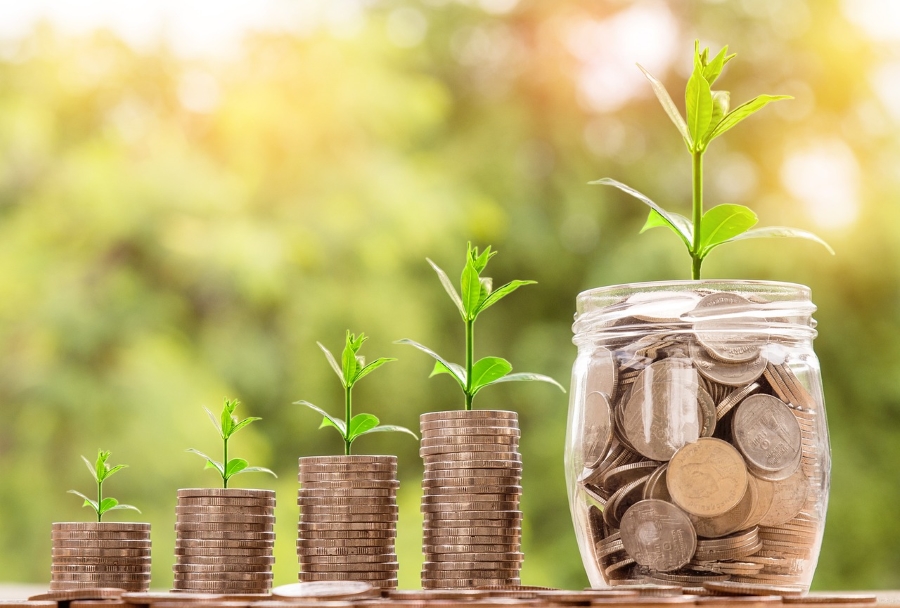
Featured

Success factor: consistency vs. routine

If you’re aiming to be successful in life, in whichever way you seem fit, and if you’re reading this blog in the first place, there’s a high chance you’ve already looked up something along the lines of “how to succeed in life”, right? Allow me to ask this: how often is “consistency” mentioned or highlighted?

From my personal experience it often snaps between the opposites – either “not mentioned nearly enough” and “…consistency matters most! (in the end)”. That in itself is confusing enough as it is. But let’s add a little bit about “routine” to that mix: in the likely chance that you follow about one spirituality-themed site or at least one celebrity or influencer, who’s remotely spiritually inclined (speak: “deep”), then it’s very likely you’ve come across the saying “Routine kills creative thought” or “If you think adventure is dangerous, try routine, it’s lethal”. How much does that resonate with you?

As someone, who spent most of his life scheduled and/or organized as much and as tidy as possible and still spends a lot of time trying to make routine out of the most trivial tasks, BUT ultimately pursues growth and success in life, these two aspects/thoughts shook me quite deeply, each in its own way and direction, respectively. Hence where the inspiration for this post came from.

Let’s start with saying, that we can all agree that consistency is surely an important factor for success, correct? Be it changing/adjusting your sleep schedule; trying to gain/lose weight through a new, healthy, adjusted diet; getting your work done sooner/better/faster, etc. Making a habit of such steps is very likely to get you the results/success you desire. But how long before that consistency becomes routine? …suddenly has a noticeable “negative” ring to it, huh? That’s the reaction I had to that sentence, anyway. (Let me just re-adjust the balance by saying, that that has a lot to do with the stigmatisation of the word (Routine) in and of society itself, which is NOT the point of this article, but felt like it needed to be addressed). But it did make me think just where the line between being consistent and “surrendering to routine” lies. I would arguably say that consistency, as a term and action, involves growth; a certain action/activity; movement. More importantly I feel it involves a certain level of conscious awareness, mindfulness and focus directed at a specific task. Whereas routine incorporates something like an “auto-pilot” – where consciousness takes its hands off the wheel of mind and, prays be, lets the body take full control of itself.
This also ties in well with our human biology, specifically neurology – not to get into overly scientific terms, but our nervous system (speak “consciousness” and “memory” works very much like that – a part of it is designed to quickly gather new information and “learn” (is active, focused), while another big part is best suited to execute and almost passively, with little to no awareness, process or recreate the stored (learned) information (for example, make a specific movement of a limb).
An example in practice of this would be, if you sleep over your alarm, then take any necessary action to get to work as fast as possible and arriving with that feeling of “I don’t even know how I made it so fast.” That is where routine still comes in very handy. Deeply stored information – (frequent) habits – need considerably less energy to execute, compared to having to acknowledge, be aware and consciously make an action, for example.

But back to the connection to success – the world, as it is nowadays, strives towards “consistent growth and progress”; “quantity over quality”, as it seems. There is absolutely nothing wrong with that. It is surely reaffirming from a growth and (business) advancement perspective. But as we know “too much of a good thing can easily turn bad“. Gathering from my observations we are beginning to direct more and more towards a “quality over quantity” mindset (or at least we ought to). This is beginning to have a much more positive effect both for us as individuals (with our individual health, spiritual-emotional wellbeing and even purpose) as well as society (consisting of individuals) and the world as a whole.

Therefore my takeaway would be: do the things you love doing and enjoy the most (as long as it’s not hurting or hindering you or anyone else, of course), even if it’s only one or two things, but do it as wholeheartedly, aware and focused as possible. Quite literally everyone can benefit from it!


Some more thoughts “to debate”: Just how different are “consistency” and “routine” to you? Are they actually similar? Or even the same thing with different terms? Should we perhaps “routinise consistency” or “consistently make use of routine”? Wordplays aside, what is your take on these topics? Do you prefer one expression over the other or do they ring similarly to you? Do you have any stories of consistency or routine from your life? Feel free to discuss in the comments.

V »velikem začaranem krogu« ni zmagovalcev

[This is a slovenian translation of the original post: “There are no winners in the great rat race“]

Vedno imamo tisto »nekaj«, kar nas preganja – bodisi je to delo, odgovornost, časovni termini; jaz temu pravim kar »življenje«. Ves čas je in bo prisotno. S tem, ko želimo zbežati od tega, se obrniti vstran in se skriti nekam, zateči v karkoli, ne bo ta »pritisk« prav nič manj pereč. Seveda se na ta način močno ZDI, da je težava odpravljena, ampak je to predvsem navidezen koncept, ki po mojem mnenju mori veliko večino svetovne populacije v današnjih časih.


Tukaj imam zanimiv pristop, ki mi je bil pred kratkim dobro razložen:
“V širšem pogledu »izpolnjujočega življenja«; v tej naši »dvojini realnosti«, nam je nekako zadano da istočasno poiščemo ravnovesje med našo osebnostjo in našo kreativnostjo oz. ustvarjanjem, a nam ravno največje prepreke tvori pretirano predpostavljanje enega čez drugo.”

Kaj to v bistvu pomeni?

Če ste koliko toliko splošno razgledani in ste v življenju že morda dali nekaj življenjskih prelomnic skozi, se boste najbrž strinjali z mano, da je »delo« eno veliko področje našega življenja, ali?

Lahko »delamo več«, lahko »delamo bolj premeteno«, a na koncu dneva »opravljati delo« običajno zaobjame poravnavo naših računov, hrano na mizi, imeti streho nad glavo ter razne »malenkosti«, ki si jih privoščimo zase ali naše najbližje.
Tako rekoč si ustvarjamo našo lastno realnost. Ustvarimo si naša lastna življenja in posledično dele družbe na splošno. S takim pristopom uberemo izjemno zdrav oprijem realnosti ali z drugo besedo odgovornost – za nas same in naše okolje (-tukaj mislim dejansko naravo, hišne ljubljenčke, rastline, tudi domovanja spadajo sem ter nenazadnje tudi soljudje okoli nas, mimogrede). Toda kar postaja čedalje bolj prevladujoče je dojemanje, da izgleda kot da je TO PRAV VSE kar je tam zunaj za nas…

…pa je res temu tako?

Ob bližjem pogledu in z metodo »upočasni, ustavi se in povonjaj cvetlice« postane zelo jasno, da ja pri tej shemi še (vsaj) en aspekt prisoten – osebnostna vrednost.
Naj pojasnim s primerom:

Kdaj ste se nazadnje vprašali: kaj vam VSE, kar imate/si lastite pomeni?

Kaj vam pomeni vaš dom, vaša služba, vaše zdravje, vaši odnosi? Koliko vam pomeni vaša osebnost in nasploh način življenja, ki ga živite? Ali ste zadovoljni s tem kar imate in kje se nahajate v življenju? Prosim, da si vzamete trenutek in si ISKRENO odgovorite na ta vprašanja.

…vidite kaj se pri tem zgodi v ozadju? Ko iščete odgovore na ta vprašanja, s tem dodajate osebno vrednoto, vrednost k vsemu, kar sem vam porodi v domišljiji (ki jo lahko označimo tudi kot »neskončno polje možnosti«, drugače 😉). S tem povezujete osebnostno rast in razvoj s pomenom in vrednostjo!

Veste kako eni pravijo temu?

Harmonija, mir ali uravnanost.
In veste kaj ta prinese na dolgi rok? Zdravje, zadovoljstvo, spoštovanje, veselje in na koncu koncev izpolnjujoče življenje. 🙏

Vse imamo na dosegu roke! Ne rabimo »se prepričevati v nekaj, se pretirano naprezati in garati čisto vsak dan našega življenja«… samo upočasniti se moramo malo, mogoče celo ustaviti za hip in dovoliti, da nas naša osebnostna vrednost dohiti in lahko skupaj z njo nadaljujemo ta uravnovešen, vesel način življenja naprej, korak za korakom – z roko v roki: vse kar ustvarjamo IN istočasno z našo osebnostjo na globlji ravni… en trenutek v času naenkrat. 😇

Povzeto: ustavi se in povonjaj cvetlice vsake toliko časa

Tako ponovno sklenemo krog: velika »podganja dirka za preživetje«, kot se temu prispodobno reče v angleščini; ki ji tako zaprisegamo in ji sledimo, a pogosto čutimo »kot da jo izgubljamo«, je v resnici le neskladje med našo ustaljeno realnostjo (- našim dosedanjim načinom življenja) in našim notranjim pojmovanjem oz. vlaganjem naše osebne vrednosti.

Po domače: življenje živimo »naučeno«, namesto spontano, lahkotno in zabavno… ali kakorkoli nam v resnici, v srcu, veliko bolj ustreza.
Res je, lahko garate, kot še človek v zgodovini človeštva ni garal in ustvarite več-milijonsko podjetje in imate prav vsako materialno stvar, ki ste si je kadarkoli želeli ali potrebovali… a če si ne dovolite občutiti sreče, užitka, miru, cenjenja in ne pustite da vas vaše osebne vrednote ne dohitijo, no… iz moje strani: veliko sreče pri »poskušanju zmagati v tej dirki«. 🤔


In še samo kratka izjava tukaj na koncu: oba načina; vsak in vsi načini, na katere živite svoje življenje so pravilni in spoštljivi. S tem zapisom nočem izpostaviti kateregakoli načina kot »boljšega« kot drugi ali da »morate« slediti tem smernicam. Moja namera tukaj je zgolj opozoriti ljudi, ki se mogoče počutijo zelo pod pritiski in/ali so blizu izgorelosti (nebodigatreba), da bi ukrepali še pravočasno s preprostim načinom, da samo presodijo lastne vsakodnevne navade in občutke, ki jih morda tlačijo v sebi. Samo ta majhen razmislek ima lahko velik vtis na osebno blaginjo in tudi na blaginjo vsakogar od nas. Moja želja za vse je, da smo kolikor zdravi in srečni kot smo le zmožni biti.
Hvala vam za branje in se prebiramo ob drugem trenutku v času. 💜😊

Naša izvirna namera naj bo vedno Veselje

[Photo by Bekka Mongeau: https://www.pexels.com/photo/white-printer-paper-22221/ ]

[This is a slovenian translation of the original post: “Our core intention should always be joy.“]

Naj poskusim nekaj malenkost drugačnega s tokratnim zapisom: namesto zgoščenega in povezanega; »predelanega« zapisa se bom tokrat osredotočil izraziti direktno kako se počutim, kaj razmišljam, karseda iz srca, in to preprosto podati v pisni obliki:

Nekaj, kar sem ugotovil tekom zadnjih let raziskovanja svoje osebnosti in doživljanja »dejanskega oz. resničnega« življenja je to, da je moj namen (življenja) zelo pomemben. Kaj moj namen dejansko zaobjema, je pa nekaj popolnoma drugega… Ampak ob postavljanju tega vprašanja in tudi nadaljnjih, kot npr. »Kaj je meni pomembno?« in »Kaj je moja želja za svet in moje življenje?« so se mi stvari začele nekoliko razjasnjevati. Namreč, v mojem konkretnem primeru se je zgodilo tako: ob izvajanju meditativnih vaj za povezovanje s sabo (=samorefleksija), se je pojavilo naslednje vprašanje:

»Če bi te oseba na cesti, ki si jo pravkar spoznal vprašala »kaj si želiš za prihodnost?«, kaj bi rekel/a?«

Moj izhodiščni odziv na to je bil tipično sarkastičen – »ah, spet še eno vprašanje »o prihodnosti«. Stari, kaj takega pa že dobrih 5 minut nisem slišal…« Ampak v istem trenutku sem bil globoko presunjen nad odgovorom, ki se mi je bil pojavil v mislih.

Moj (intuitivni) odgovor je bil, da bi želel, da se bi ljudje več smejali. 😊

Samo to. Čisto preprosto. Prijatelji, ki so to vajo izvajali sočasno z mano, so za svojo izkušnjo podali izjave kot: »želim si biti najboljša verzija sebe« ali »želim si ustvariti stabilen način življenja« ali »vse tako kot je, le več ljubezni do sebe in navdušenja ter hvaležnosti«… in jaz, mojster, izjavim: »Čuj, jaz bi se samo rad malo več smejal, veš? To je to, kar bi mi bilo v tem trenutku najpomembnejše.« 😂

Ampak kaj sem zares, v globini mislil s tem?

Ne pravim samo, da bi želel, da ljudje »od-smejijo« vse svoje tegobe in bolezni stran. Moja iskrena želja s tem je bila, da bi ljudje na splošno nehali jemati življenje TAKO JE*ENO resno! Preprosto nehajmo poudarjati in izpostavljati vse slabe novice in poročila na televiziji in internetu. Nehajmo obrekovati človeka, ki ga komajda poznamo. Nehajmo se pritoževati o slabem vremenu, globalni zdravstveni in ekonomski krizi… nehajmo se smilit sami sebi in si govoriti, da smo edini, ki se spopadamo s takšnimi situacijami in da nismo sposobni tega preiti…

…namesto tega se raje pošalimo na račun tega.😃

»Kaj zdaj jokec/jokica? Z vsemi temi solzami, ki jih točiš tukaj, bi lahko cel pod umil/a.  Če narediš en majhen korak nazaj in pogledaš malo širšo sliko, v resnici ni vseeeeee TAKO slabo, a ne da? Super ti gre; super, da si dovoliš dati ta čustva ven namesto, da bi jih tlačil/a v sebi. Daj… vzemi tisto metlo s krpo, zavrtimo eno pustolovsko piratsko pesem in pobrišimo poplavo na palubi naše ladje!« 🤗🏴‍☠️🦜

Si se vživel/a? 😜 Kaj pa tale:
– »uf, zunaj je taaako vroče in še samo topleje postaja, to je neznosno…«
– »…kaj češ, sej še samo približno 4.999.998.000 let dokler na soncu ne zmanjka vodika in izgori. Brez skrbi, je že v teku in čedalje bližje smo temu dogodku!« 😆

Bistvo, ki vam ga z vsem tem želim predstaviti je, da naj bo naša individualna (in tudi posledično kolektivna) osrednja namera karseda vedno veselje. Veselje dobesedno izboljša vsako situacijo. »Življenja se loti z veseljem.«
Imaš pred sabo obetaven razgovor za službo? Poskusi z veseljem opazovati in raziskovati svoje potencialno prihodnje delovno mesto in se predstavljaj kako bi (boš) užival/a tam (in tudi morda kako malenkost, ki ti ne bo toliko sedla).

Je začelo deževati in nisi vzel/a dežnika s sabo? Poskusi najti zadoščenje v tem, da bodo zemlja in vse rastline dobile svojo rešilno bilko za obstoj in rast in da bodo kmetje lahko en popoldan počivali, ko jim ne bo potrebno zaliti pridelka. (Ampak ob tem vseeno poskusi čim prej najti neko streho, kamor se lahko zatečeš pred dežjem, da te ne bi premočilo in se prehladiš 😅 …ali pa, sej veš – si zapoj tisto znamenito pesem, ki govori o petju v dežju (»Singing in the rain«) in poskoči v karseda čim več luž ob poti.) (…in POTEM si privošči toplo kopel/tuš in se ogrni v mehko brisačo/deko😁).

Naša osrednja namera naj bo vedno in povsod veselje.

Žiga Grušovnik

Smo izjemno sposobna bitja in LAHKO ustvarimo veselje tudi v najtemačnejših časih in najbolj obremenilnih situacijah… Prav to je po mojem mnenju pomagalu človeški vrsti vztrajati in preživeti vseh teh desetero tisoč let. In po vsem tem niti ni telesno oz. fizično vezano! Je tako rekoč samo »kvaliteta«. Niti ni vezano na zemeljsko, materialno življenje, temveč bolj na stanje duha. In kot vsi dobro vemo, energija ne nastane »iz ničesar« in ravno tako ne gre »v nič«. Vedno in vselej je prisotna. Le svojo obliko nenehno spreminja… zato izberi obliko ljubečega veselja in bodi tudi sam/a bolj vesel/a, srečen/a in konec koncev zadovoljen/a. 🥰

“Kar ne veš, ne boli« ali »Želim vedeti VSE kar je« – tanka črta anksioznosti

[This is a slovenian translation of the original post: ““Ignorance is bliss” vs. “Wanting to know too much” – the tightrope of anxiety.]

Preprostost je dandanes praktično postala tuj koncept v našem življenju, a vendar je včasih pravzaprav ključnega pomena za naše preživetje in zdravje. Po drugi strani pa smo včasih nagnjeni ubrati »linijo najmanjšega upora« in se potem počutimo razočarani ali  kot da smo obtičali.
V tem zapisu želim predstaviti kako uravnavati ta dva ekstrema, ki na koncu oba vodita do pojava tesnobe oz. anksioznosti. Namreč, ne glede na to, kateri pristop uporabimo, vodi do točke zloma – bodisi v primeru, ko smo preobremenjeni z informacijami; ko »želimo še več in več«, kadar preveč razmišljamo (o prihodnosti, npr.) ali enakovredno, kadar želimo »preprosto zbežati od vsega«. Oboje predstavlja le (navidezen) način zapolnjevanja praznine znotraj nas, zaradi česar se naš organizem pač na koncu »zakrči«.


Izvorni način delovanja = le ena stvar naenkrat

Veliko novodobnih raziskav je pokazalo, da človeški organizem najbolje opravlja eno opravilo naenkrat. Smo »samo eden/ena« in bi bilo primerno, da to sprejmemo in v skladu s tem opravljamo tudi samo eno opravilo naenkrat, a le temu posvetimo 100 % pozornosti/fokusa – t.i. »absolutni fokus«. Pomeni posvetiti vso našo pozornost izključno opravilu pred nami v danem trenutku. Na tak način smo zmožni vložiti največji trud in temu primerno pridobiti tudi najboljše rezultate. Do tega posledično pride, ker ob opravljanju tega enega opravila ne razmišljamo o drugem, nepovezanem opravilu. V tem primeru bi v bistvu dovajali energijo/pozornost stvári, ki se še niti ni zgodila! Ali s koristno parafrazo: »Zaskrbljenost glede prihodnosti povzroči, da jo doživimo kar dvakrat« (iz ang.: “Worrying about the future makes you go through it twice”). V obeh trenutkih se porablja dragocena energija. O tem smo že govorili in dobro povzeli z »metodo: vzemi sabo«.

Bežanje NI rešitev

Bežanje od vsega (v obliki nevednosti, »ignorance«) je oblika izogibanja, in čeprav nam nudi kratkoročno zadovoljstvo, nam je veliko večja ovira pozneje, na dolgi rok. Tako povzroči stagnacijo in »zadušitev duha«, če lahko temu tako rečemo. To se nabira v fizičnem telesu kot odvečna tenzija/napetost in na koncu koncev vodi do raznih obolenj in togosti delov- ali celotnega telesa (tudi do raka, v hudih primerih).
»Stvari se zgodijo z razlogom« kot dobro vemo. In ravno tako vse na kar naletimo v našem življenju. Resda ne rabimo ponotranjiti VSEGA kar srečamo, a kar bi bilo koristno spoznati v trenutkih »preobremenitve« je naslednje: narediti korak nazaj, če potrebno, se zavzeti situacije in potem postopati en korak za korakom, osredotočeno. »Stopiti korak nazaj« se morda sliši kot »ignoriranje«, ampak osebno vidim to nekako tako: »ok, sprosti se, naredi globok vdih in izdih… zakaj se pravzaprav tako razburjam?«

Vidite trik pri tem? Podana je namera, želja »najti rešitev; se premakniti naprej«, medtem ko bi ignoriranje zgledalo bolj kot »oh, to je preveč, ne zmorem tega/ni fer/zakaj jaz, zakaj ne nekdo drug« ipd. V tem slednjem primeru ni čutiti kaj veliko upanja za prihodnost, kajneda? 😅

Tudi več ni vedno boljše

Pretirana potreba po poizvedovanju, po drugi strani, je dokaj podobna situacija, le da namesto, da »zavrnemo vsakršno breme« v tem primeru »naložimo več bremena, kot smo zmožni nesti«. Pogosto tiči vzrok tega v naši privzgojeni »racionalnosti« – da je vse, kar je opredeljivo, tudi »izvedljivo« iz logičnega vidika našega uma. Ampak tekom razvoja uvidimo, da realnost ni prav tako enostavna, kaj bi rekli? Realnost; življenje, je veliko bolj zapleteno in zelo nepredvidljivo kljub »razumevanju temeljnih osnov, kako stvari delujejo oz. se odvijajo in kako BI SE NAJ«. K temu dodajmo še t.i. »pristranskost opazovalca«, ki pravi, da že samo opazovanje eksperimenta na najmanjši možen način vpliva na izid (zaradi naših intuitivnih pričakovanj, recimo). Povrh vsega, po mojem mnenju, nekatere stvari preprosto ne moremo razumeti in niti temu ni namen.

Drugače ubesedeno: »nekatere stvari ne rabijo biti razrešene/razumljene«. Vsaj mogoče ne v danem trenutku in kraju, ampak kvečjemu kasneje, ob drugem trenutku in spontano (temu pravimo »epifanije« = »bogojavljanje« ali »hevreka efekt«; po domače rečeno »ko ti/nam klikne«). Ni nam potrebno vedno razumeti vsega. Pogosto rabimo razumeti le bistvo situacije in dati našemu umu pavzo od odvečnih detajlov in informacij. Prav vedno bo tam zunaj nekaj več, kar se da naučiti… zatorej je poskušati vedeti VSE naenkrat Sizifovo delo – čisto nesmiselno. MI SAMI smo tisti, ki določimo kdaj »vemo/znamo dovolj« (v danem trenutku, seveda!)

»Razumeti« ne pomeni enako kot »vedeti«, kaj šele »udejanjati.«

Žiga Grušovnik
Kako iz tega cikla?

Nekaj pristopov, ki imajo veliko zmožnost nas spraviti iz te »spirale negativnosti/ciklanja« so v bistvu zelo preproste in jih lahko izrazimo kot ključne besede, npr.: radovednost, občudovanje, odprtost, čarobnost, prepuščanje, brezpogojna ljubezen, prijaznost, zabava in sreča; vera in zaupanje… ampak vse to z namero/namenom! Namen ZA vsakim razpoloženjem je ključnega pomena!
V praksi se pogosto še samo bolj poenostavi – s fokusom/pozornostjo.

 »Kamor usmerjamo našo pozornost, tja dovajamo našo energijo.«

Ves čas se gre predvsem zato, kako dojemamo stvari – če se osredotočamo na slabe stvari, je naše dojemanje negativno. Če pa se osredotočimo usmeriti naše namere na prijetne stvari, ne glede na to, kako majhne se nam zdijo, se stvari dojamejo veliko bolj pozitivno! V resnici je tako enostavno. 🙃

The school of life” so zelo dobro povzeli v njihovem Youtube videu z naslovom: “How to simplify your life” (»kako poenostaviti naše življenje«) (parafraziran prevod): »ker so včasih nekatere stvari tako ne-relevantne za nas oz. naše življenje kot pristojniki egipčanskega sodišča kralja Snefera, daljnega leta 2613 pr. n. š.« 🤷‍♂️

Ko tako pomislimo, je v bistvu zelo malo stvari, ki so ključnega pomena za nas v danem trenutku in veliko, veliko stvari, ki to niso. Na koncu se gre zgolj za »drugačen perspektivo«. Človek, kot živo bitje, ima neverjetno sposobnost za prilagojevanje in spremembe. V zadnjih časih še posebej pozabljamo ali zanemarjamo to dejstvo naše narave. Najbolj zdrav pristop izberemo, ko smo v enem obdobju odločni in delavni in v naslednjem trenutku že umirjeni in sproščeni – lahko smo oboje! To nam je vselej dovoljeno in tudi zaželeno. Pridejo časi, kadar se moramo spopasti z odgovornostmi, se postaviti zase in prerasti strahove, a prav tako pride čas, ko (si) je čisto spodobno reči: »J*beš! Počutim se čisto vredu tako kot sem in tista stvar LAHKO počaka.«


Upam, da vas je ta članek kakorkoli navdihnil, da se boste odločili biti sproščeni ALI produktivni (ali pa oboje, eno ZA drugim, hehe 😄). Če vas je, ste vabljeni deliti svoje prebliske v komentarjih – vsakdo lahko nekaj odnese od navdihujoče zgodbe, TUDI če ta zajema zgolj zavesten, namenski počitek! 👌😌
Ostanite uravnani in se vidimo/beremo ob drugem trenutku v času. 💜

“Šele z razdajanjem postane človek bogat” – “oh, ja”

Image by Nattanan Kanchanaprat from Pixabay

Ni toliko pomembno, koliko/kaj naredimo v življenju, temveč s koliko LJUBEZNI delamo karkoli.

Žiga Grušovnik

Kaj se je zgodilo s staro dobro “kvaliteto, ki jo plačaš“? A smo res preslepljeni z lovom na vse “brezplačno”? Bomo s tem res zapolnili praznino znotraj nas? Je RES v tem bistvo? Na tematiko zapravljanja denarja; prav o dejanju dajanja/plačevanja denarja za [nekaj]: VSE, za kar plačamo neko vsoto, nam tvori večjo »vrednost« v primerjavi s tem, ko nekaj koristimo/dobimo zastonj/brez plačila. Poglejmo o čem v resnici gre tukaj…


“Zastonj preprosto ne gre več tako dobro v promet dandanes….

Naj vam povem eno zgodbico/opišem en dogodek iz dejanskega življenja, pripetljaj iz prve roke, ki se je zgodil moji mami: nekega poletja je obiskala cvetličarno, dvakrat, približno en teden narazen. Ob prvem obisku je opazila šopek sončničnih cvetov, ki so bili videti nekoliko oveli. Ob njenem drugem obisku, samo nekaj dni kasneje, so bili prav vsi cvetovi prodani. Ob njenem presenečenju je vprašala cvetličarja, kako mu je uspelo prodat vse cvetove v tako kratkem času. Razložil ji je, da se sončnice niso prodajale tako dobro v minuli sezoni in da so bili preostali cvetovi le nekoliko »povešeni«, ampak celotna rastlina je bila popolnoma zdrava in jih ni želel zavreči. Zato se je odločil jih preprosto podariti. Tako jih je malo osvežil in jih položil v košaro z malim napisom »vzemi me 😊«. In na njegovo presenečenje, stranke niso bile vzele niti enega cveta! V svoji osuplosti in razmišljanju, kaj naj zdaj vendar naredi s cvetovi, se je odločil jih prodati za simbolično ceno (1€)… in glej ga zlomka – prodal je vse do zadnjega!
Medtem, ko je razlagal zgodbo moji mami, je smejé dejal: »ljudje so očitno bili prestrašeni ali nezaupljivi, češ, da gre za neko prevaro ob tem, ko ni bilo cene na cvetovih«. ALI pa: v resnici niso znali prepoznati vrednosti dokler nekdo drug ni sam določil/ovrednotil stvari po njegovi presoji.

Gre se za izkušnjo, bolj kot vsoto sámo…

V tem in podobnih primerih gre zgolj za perspektivo in v naši današnji materialistično orientirani družbi lahko bajna cena na etiketi izzove eno od sledečega: ali posmeh v najslabšem ali pa interes v najboljšem primeru. Vedno sta na voljo ti dve možnosti!
In prepričan sem tudi, da smo vsi imeli opravka s situacijo »prodaje mačka v žaklju«, kjer smo bili omehčani z laskavo ponudbo in šele naknadno ugotovili, da pa smo bili malenkost »mimo« z našo percepcijo. Seveda so takšne situacije zares nadležne in nezaželene, ampak so kljub temu pomemben korak pri učenju o našem dojemanju vrednosti: to je tisto, kaj mi cenimo, kako cenimo in kako lahko nekdo drug to ceno uporabi, da nas izkoristi v negativnem smislu ALI pa tudi da nam pripravi dejansko ugodno ponudbo, na primer.
In res je, zna biti zelo neprijetno, in ja, denar igra pomembno vlogo v življenju, a na koncu koncev je le in samo medij preko katerega se približamo (ali se oddaljimo) stvarem/okoliščinam, ki si jih zares želimo ali rabimo. To je vse. Nič več, nič manj.

“Vrednost je mera, ki se ne da izmeriti poenoteno”, pomnite to.

Žiga Grušovnik

Tudi Derek Sivers, raznovrstni ustvarjalec in podjetnik, v svoji knjigi »Your music and people« (prevedeno: »Vaša glasba in ljudje«) zelo dobro opiše ravno to tematiko.
(Iz njegove strani: https://sive.rs/morepay (prevedeno)):

  • “Psihološki eksperimenti so pokazali, da več kot ljudje plačajo za nekaj, tem bolj cenijo to.”
  • “Ljudje, ki so v medicinskih testih dobili placebo zdravilo so v povprečju dvakrat pogosteje poročali o lajšanju bolečin/simptomov po tem, ko jim je bilo povedano, da je bilo zdravilo drago.”
  • “Kadar ljudje iščejo »najboljše«, pogledajo ceno, da jim pove kar je dobro. Mislijo celo, da je dražje vino bolj okusno. Da dražje slušalke oddajajo boljši zvok. Četudi so te stvari v ozadju pravzaprav zelo podobne cenejšim izvedbam.”

Osrednji namen tega zapisa je namenjen vsem čudovito kreativnim ljudem tam zunaj: ne biti prestrašeni dati cene na vaše srčne, iz strasti izhajajoče izdelke in/ali produkte – to vas ne bo naredilo »pohlepnih, samovšečnih ali zahtevnih«. Če karkoli, to ustvari še večjo vrednost. In, glede na moje izkušnje iz prve roke ter zgodbe drugih ljudi, ko ta cena primerno odraža vašo strast in ljubezen do samega izdelka in s tem do vaše osebnosti oz. edinstvene energije same, se BO zadeva prodala(-ajala)! In to ravno najbrž ljudem, katerim odraža enako ali podobno vrednost. In takšni smo čedalje bolj povezani, mimogrede! 😉💜
Če imate kakšno svojo zamisel, kakšen svoj hobi/posel, kak projekt in bi si ga želeli deliti z drugimi, ali pa ste preprosto zasledili nekaj zelo kreativnega ali praktičnega na spletu, vas vabim da to delite na naši facebook strani in sami sebe na ta način “izpostavite”, hkrati pa (morda) spletete nove vezi s podobno mislečimi ljudmi (ali celo začnete svojo storitev!) 🤩
Do naslednjič – cenite se in se beremo ob drugem trenutku v času. 😇

»Ljubezen = zdravje« – kako vzgajati Ljubezen in ozdraveti

[This is a slovenian translation of the original post: ““Love = Health” – how to clutivate Love within yourself and heal”.]

Ljubezen je najbrž najmočnejša sila v širnem vesolju, to nam je dobro poznano. »Zaradi ljubezni se svet vrti« (iz ang:. »Love makes the world go round«), ampak ne samo to – ljubezen je nepogrešljiva sestavina, ko pride do zdravljenja in splošnega (dobrega) zdravja/počutja. Ampak od kod pravzaprav le-ta izvira? In kje »skladiščimo« ta čudovit vir obilja? Splošna znanost šele začenja razkrivati moč, ki jo ljubezen in dobre namere lahko imajo na naše zdravje. Področja kot so: vplivi namere, psihologija, osredotočanje/fokus in podobno, tudi splošna uspešnost/uspeh in seveda tudi osebno zdravje dobivajo čedalje več pozornosti skozi raziskave in iz le-teh izhajajočih (pogosto blagodejnih) ugotovitev. Dovolite, da z vami delim nekaj pogledov na Ljubezen kot zdravilno silo in ponudim kratko vajo/vodeno meditacijo, ki vam bo v pomoč kako privzgojiti in negovati svoj notranji izvir ljubezni (do sebe) in zdravja.


Lahko voda zaznava Ljubezen?

Čeprav šele začenjam vpogledovati v te »sile, ki nas tvorijo«, sem tekom svojih raziskav našel skoraj ena proti ena povezavo med življenjem in vodo. Nič kaj novega, kajne? Vsi vemo, da življenje v osnovi izvira iz oceana oz. naših svetovnih vodá, je tako? Po mojem mnenju torej mora biti še nekaj več pri tem. Naredimo še korak naprej in izpostavimo, da naše človeško telo sestoji pretežno 70 % iz vode. To je potem že konkretna potrditev povezave med življenjem in vodo. In še samo malenkost dlje: kri – tekočina ki nas oživlja, oskrbuje vse celice ter cerebrospinalna tekočina, ki obdaja naše možgane in celoten živčni sistem lahko sestoji tudi do 99 % iz vode! A ni to zanimivo? Ampak, da ne zaidemo preveč, to je le primer, s katerim si lažje interpretiramo in predstavljamo, kako v praksi tok življenja teče kot kri (voda) skozi naše telo. Pretaka se skozi nas in znotraj nas, ves čas, prav ob vsakem vdihu in gibu, ki ga naredimo… meni se zdi to precej čarobno, iskreno. 😍

Desetkratni pospešek procesa celjenja

Nazaj na našo »tekočo« temo – naša zmožnost oz. zmogljivost občutiti ljubezen lahko ozdravi ali pa vsaj pospeši postopek celjenja/zdravljenja najmanj desetkrat. »Ljubezen« kot izraz je neke vrste mentalni konstrukt, saj se je lahko dotaknemo iz dveh smeri: kot misel na/o Ljubezni in hkrati jo občutimo kot občutek. Na nek način je precej »izmišljena«, če tako gledamo. Kar pa bi pomenilo, da jo lahko praktično »ustvarimo/povlečemo iz nikoder/iz ničesar«. Ali z drugimi besedami: vedno je z nami/v nas samih.
Prav ob vsakem trenutku imamo možnost se dotakniti tega vira ljubezni, miru, upanja itd., ki prebiva znotraj vsakega od nas in nam pomaga rasti in celiti. Torej lahko začutimo oz. občutimo ljubezen znotraj nas samih in prav tako tudi v naši okolici. Natančneje jo po navadi začutimo v telesu v območju srca, v prsnem košu, ampak hkrati lahko abstraktno »razmišljamo« o njej v naših možganih in jo torej občutimo tudi v živčnem sistemu. In spet, iz tega sledeče: torej, če je ljubezen tudi v našem živčnem sistemu, ki nam omogoča čutenje, zaznave in premike, potem lahko preko tega tudi pošljemo/oddajamo ljubezen v katerikoli del telesa.

Prav to pošiljanje ljubezni v katerikoli ranjen/poškodovan del telesa lahko ima revolucionarne zdravilne učinke za katere pa niti (pogosto) ne potrebujemo zdravil. Povezovanje fokusa oz. namere z močjo iskrene ljubezni lahko in tudi je vodilo do mnogoterih »spontanih remisij« (kot temu pravijo strokovnjaki). Z dovolj vaje, potrpežljivosti, vztrajnosti in ozaveščenosti; s pomočjo poglabljanja v ta naš neomejen izvir ljubezni, lahko postanemo sami svoji »zdravilci« in preidemo skoraj vsako obolenje!

[Izjava o omejitvi odgovornosti]: seveda to ni »100 % zagotovljeno brez stranskih učinkov oz. ovir«. Ob vsakršnem obolenju, ki zahteva jemanje zdravil se najprej predhodno posvetujte z vašim zdravnikom oz. specialistom. Ta pristop ni nujno koristen za vsakogar ob vsakem trenutku in pod vsakimi pogoji. Nekatere bolezni POTREBUJEJO pomoč medicine in izkušenih strokovnjakov ob vseh meditacijah, vizualizacijah in vsakršnih drugih holističnih metodah.


Torej, zdaj, ko se tega zavedamo: tukaj je metoda, ki jo sam pogosto uporabljam in je v veliko pomoč pri sproščanju v vsakdanu. Je preprosti način, kako obuditi Ljubezen in kako jo lahko uporabimo za celjenje/zdravljenje ali vsaj za pospeševanje procesa zdravljenja katerega koli prizadetega dela telesa:

  1. Udobno se namesti, sedé ali ležé, in naredi nekaj globokih vdihov in izdihov in se karseda popolnoma sprosti. Lahko tudi nežno zapreš oči, če ti tako ustreza.
    (Najlažji primer osredotočenega dihanja je recimo metoda »4×4«: 4 sekunde se osredotočaj na vdih, 4 s zadrži, 4 s izdihaj in spet 4 s zadrži, nato ponovi.)
  2. Naredi kratek »scan telesa« – začuti/zaznaj celotno svoje telo: začuti glavo, obraz, oči, čelo, nos, usta, ušesa; prsni koš, trebuh, hrbtenico… vse dol do nog, stopal in prstov in zaznaj katerikoli del, ki je napet ali boli.
  3. Ob tem preusmeri svojo pozornost in probaj začutiti Ljubezen. Nekaj ali nekdo, ki ga TI iskreno ljubiš/imaš rad. Lahko je karkoli: najljubša hrana, ko si lačen/a, najljubša pesem na radiu, videti svoje starše/partnerja(-ko)/najbližje, ki se smejijo in so veseli; svojega hišnega ljubljenčka… Lahko je tudi preprosta mirna naravna pokrajina… lahko pa tudi preprosto sočutje in dobrota v kateremkoli delu sveta ali za cel svet nasploh.
    Ali, če nič od tega ne zaleže, si predstavljaj preprostega smeška – nasmejan obrazek z nasmehom od ušesa do ušesa, ali ki se iz srca smeje. Smeško. 🙂😄
  4. Nato se vrni k tistemu napetemu/obolelemu delu telesa in se poskusi osredotočiti nanj medtem ko čutiš te občutke sreče, veselja, dobrote, vere, upanja, miru, lahkotnosti… in si pomagaj z vizualiziranjem sija v katerikoli barvi želiš okoli tega predela. (To velja za vse dele telesa – ude in tudi notranje organe kot želodec ali možgani tudi).
  5. Potem pa začuti oz. si predstavljaj ta del telesa kot popolnoma zdrav, brezhiben! Začuti ljubeč tok krvi in energije, ki spirata bolečino/tenzijo iz tega predela. Poskusi ne misliti preveč, raje začuti. Zavzemi se za vsak krč in sproščanje vse tenzije…
  6. Skozi celoten ta proces poskusi biti osredotočen na občutek hvaležnosti v prvi vrsti; za vso zdravje ki ga prejemaš/ustvarjaš. Lahko tudi sam/a pri sebi afirmiraš (po tiho ali na glas): »Hvala za moje zdravo telo.« »Hvala za moje zdrave noge, za zdravo kri, ki teče po žilah; za močan imunski sistem, zdrave možgane…« In lahko si potem predstavljaš vsak ta del telesa, kot da se ti smeji nazaj in pravi »Hvala tudi tebi.« 😊
  7. Ko začutiš, da imaš dovolj, še enkrat občuti hvaležnost in se nežno pretegni, naredi globok vdih in izdih ali dva, začuti noge na tleh in mirno nadaljuj z dnevom.

To vajo lahko izvajate kakor dolgo želite oz. vam ustreza, kjerkoli ste oz. utegnete tekom dneva. Najpomembnejši del vsega tega je karseda zares občutiti te občutke – osredotočiti se predvsem na srčno zaznavo bolj kot na misli/razmišljanje. Izkusite/začutite svoje telo!


Upam, da vam ta vaja in vpogled pomaga preiti kakršnekoli bolečine in obolenja, s katerimi se trenutno spopadate. 🙂 Če ste že poskusili vajo – kako ste se ob tem počutili? Kaj ste začutili?
Ste poskusili še kakšno drugo podobno metodo in bi jo lahko primerjali s to? Komentirajte svoje pomisleke in izkušnje v komentarjih in seveda delite z nekom, ki bi mu/ji to »navodilo« prišlo prav. 🙏
Sicer pa ostanite spontani, naprej občutite in delite ljubezen (do sebe IN drugih) in se vidimo/beremo ob drugem trenutku v času. 😉

Design a site like this with WordPress.com
Get started